
Crete Weather Month by MonthWhen to visit the island and what to expect in each season
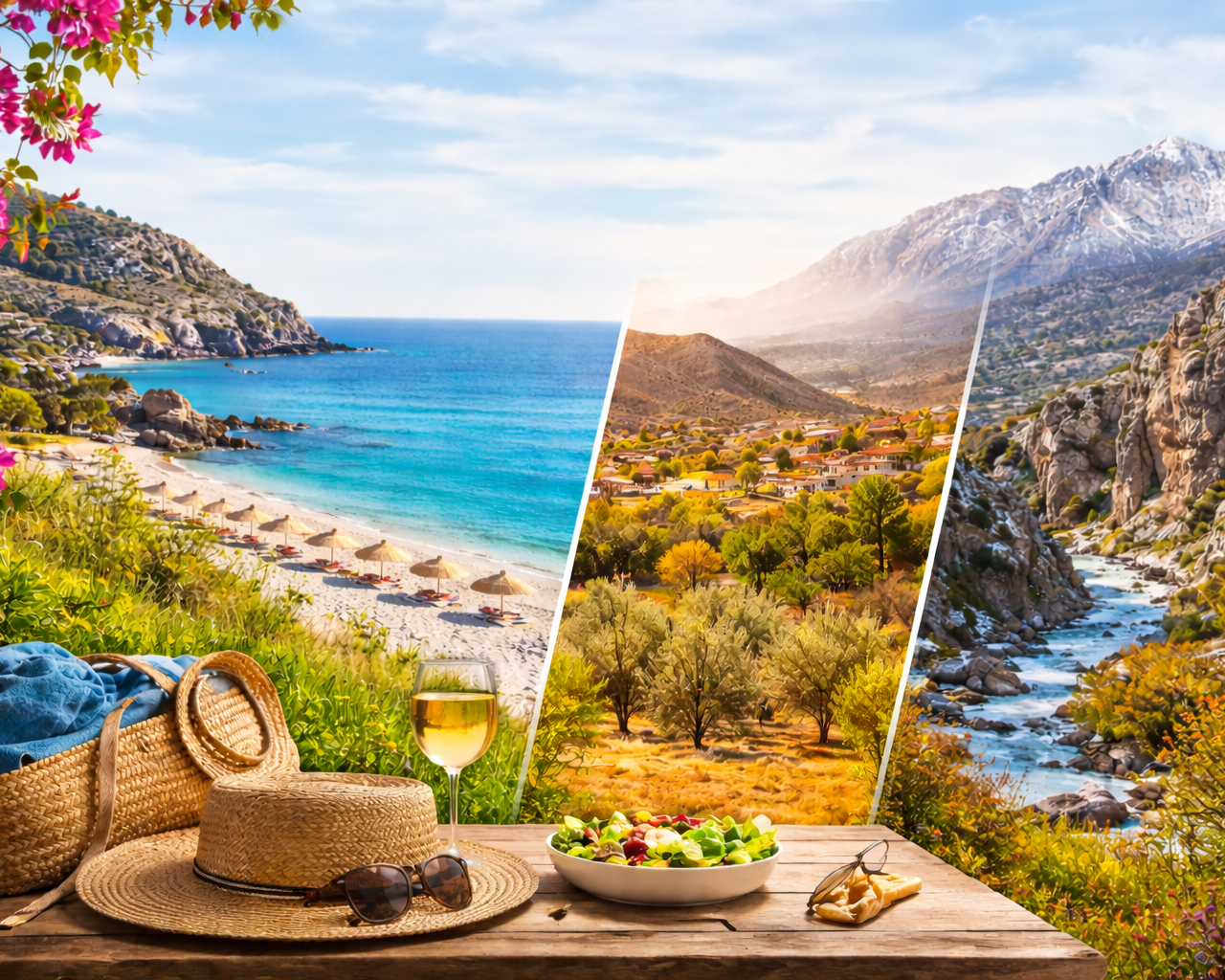
Crete’s climate is one reasons travellers return again and again. With over 300 days of sunshine per year, the island offers pleasant weather for much of the year.
But Crete is also a large and diverse island. Mountains, valleys and coastlines create microclimates, and the weather along the Libyan Sea in South Crete is often warmer and sunnier than in the north.
For travellers planning their trip, the most useful question is not simply “What is the weather like?” but rather: What is the best time to visit Crete?
The answer depends on the kind of experience you are looking for.
January – February
Winter on Crete
Winter is the quietest season on the island.
Average temperatures are mild compared with much of Europe, often ranging between 10–16°C, though the mountains can see snow. Along the south coast the weather is often bright, but storms and rain can occur.
This time of year is less about beaches and more about experiencing everyday life:
• quiet villages
• dramatic winter seas
• snow on the mountains of Psiloritis and the White Mountains
• carnival in Rethymno
Travellers who enjoy solitude and local life sometimes find winter surprisingly rewarding.
March – April
Spring begins
Spring is one of the most beautiful seasons on Crete.
Winter rains have brought the landscape back to life, and hillsides fill with wildflowers and orchids. The air is fresh, the temperatures comfortable and the island still relatively quiet.
Typical temperatures range between 16–22°C, ideal for:
• hiking through gorges
• exploring archaeological sites
• walking through mountain villages
Many travellers consider this one of the best seasons for discovering the island’s nature.
May – June
Early summer
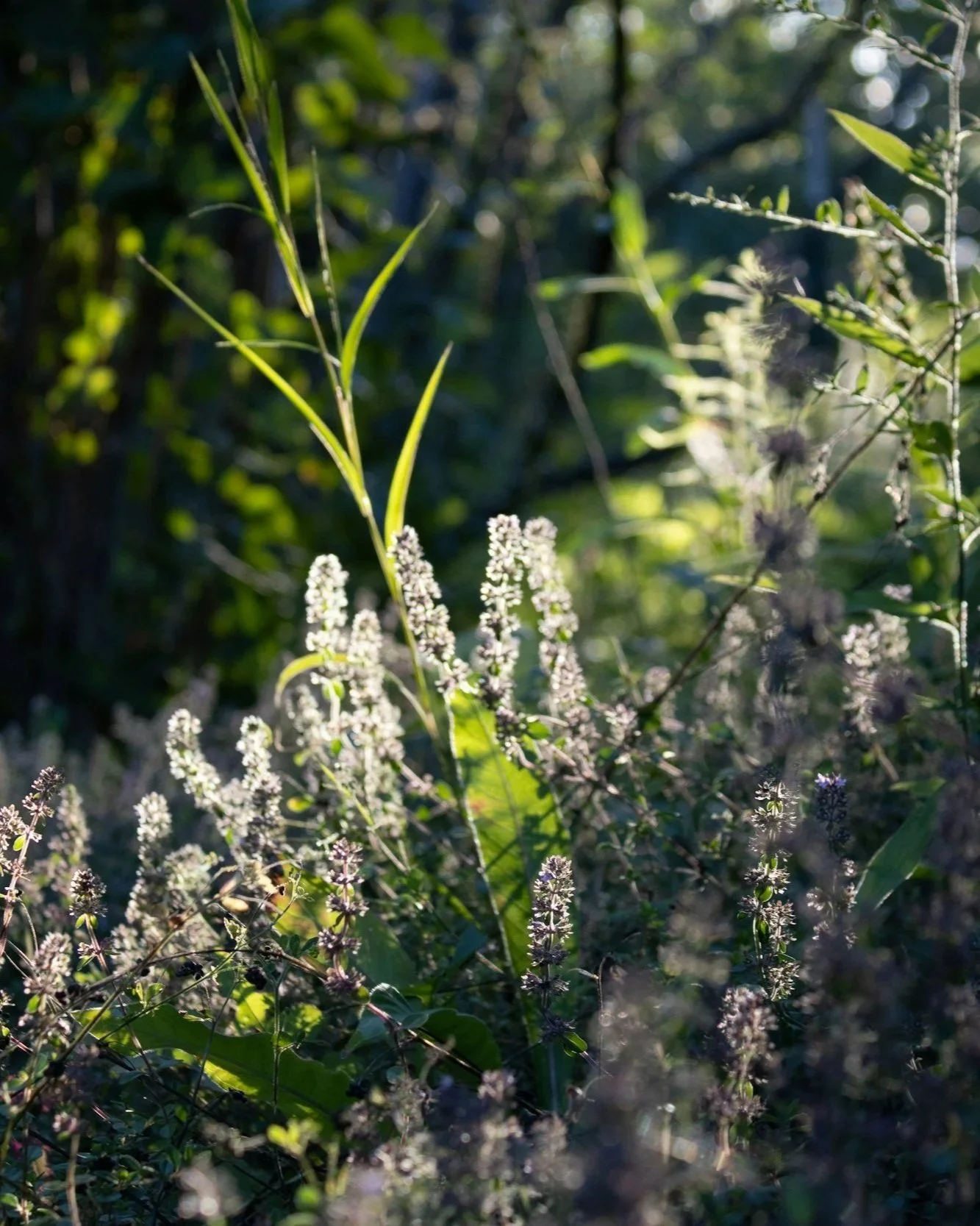
Late spring and early summer combine pleasant temperatures with long days of sunshine.
By May the sea begins warming up and beaches become more inviting, though they remain far less crowded than in peak summer.
This period is ideal for:
• beach days along the Libyan Sea
• hiking and exploring gorges
• visiting historic towns such as Rethymno or Chania
Temperatures typically range between 22–28°C, warm but comfortable.
July – August
High summer
Summer is Crete’s busiest season.
Temperatures often reach 30–35°C, and the sea is at its warmest. Coastal areas come alive with travellers, and many villages host festivals and evening events.
Typical summer experiences include:
• swimming at beaches like Triopetra or Agios Pavlos
• boat trips along the south coast
• long evenings at seaside tavernas
Wind can occasionally appear along the south coast, but it usually lasts only a day or two and often brings welcome relief from the heat.
September – October
One of the best seasons
Many experienced travellers consider early autumn the best time to visit Crete.
The sea remains warm from summer, but temperatures become more comfortable, usually around 24–28°C in September and slightly cooler in October.
This period is perfect for:
• swimming and beach walks
• hiking in cooler temperatures
• exploring villages and countryside
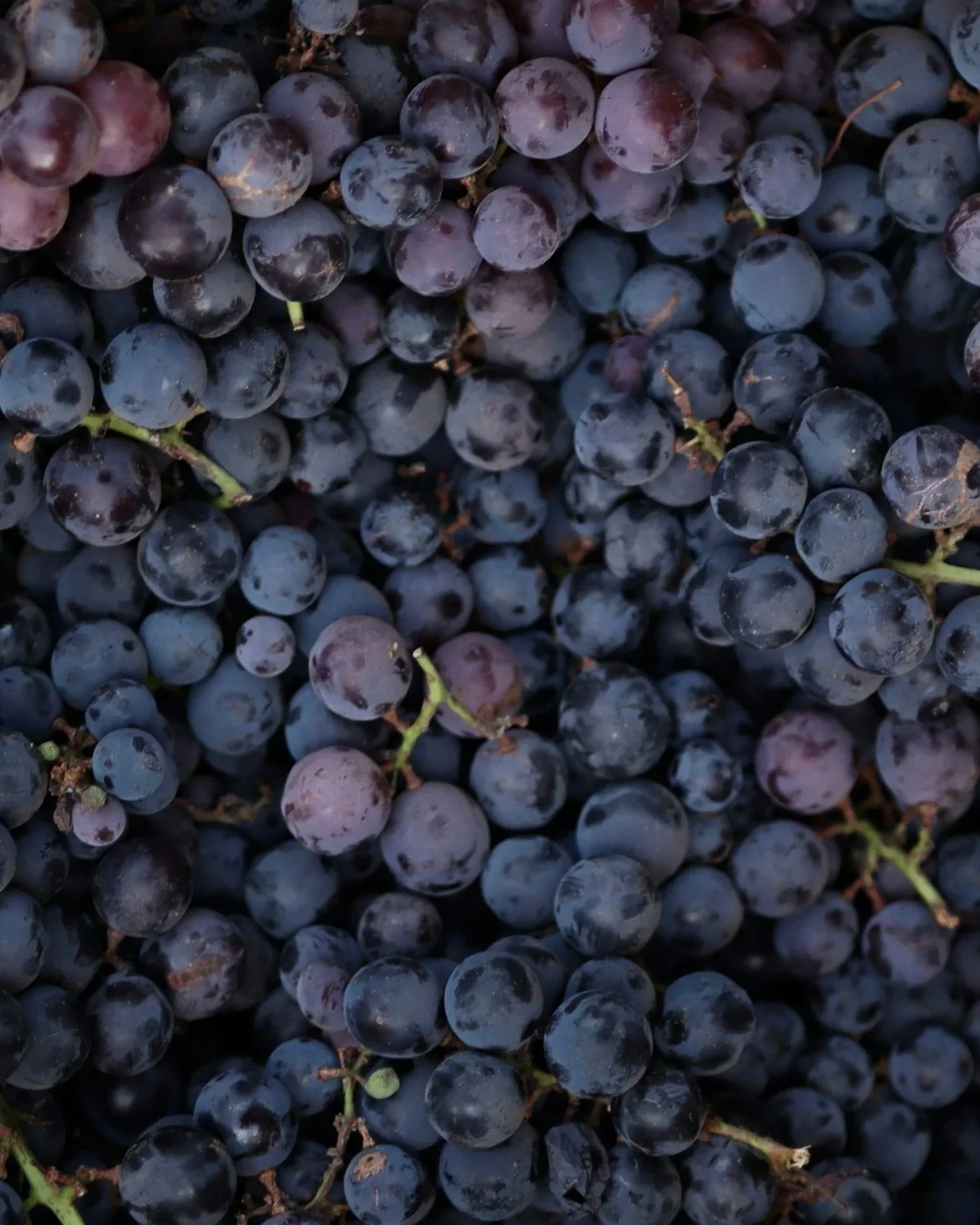
Harvest season also begins during autumn, bringing wine festivals, grape harvests and traditional celebrations.
If you would like to explore local celebrations and seasonal traditions, our guide to festivals in Crete highlights some of the island’s most important events throughout the year.
November – December
A quieter side of the island
Late autumn brings cooler temperatures and occasional rain, but sunny days remain common.
This time of year reveals a slower rhythm of life:
• olive harvest season
• quieter villages
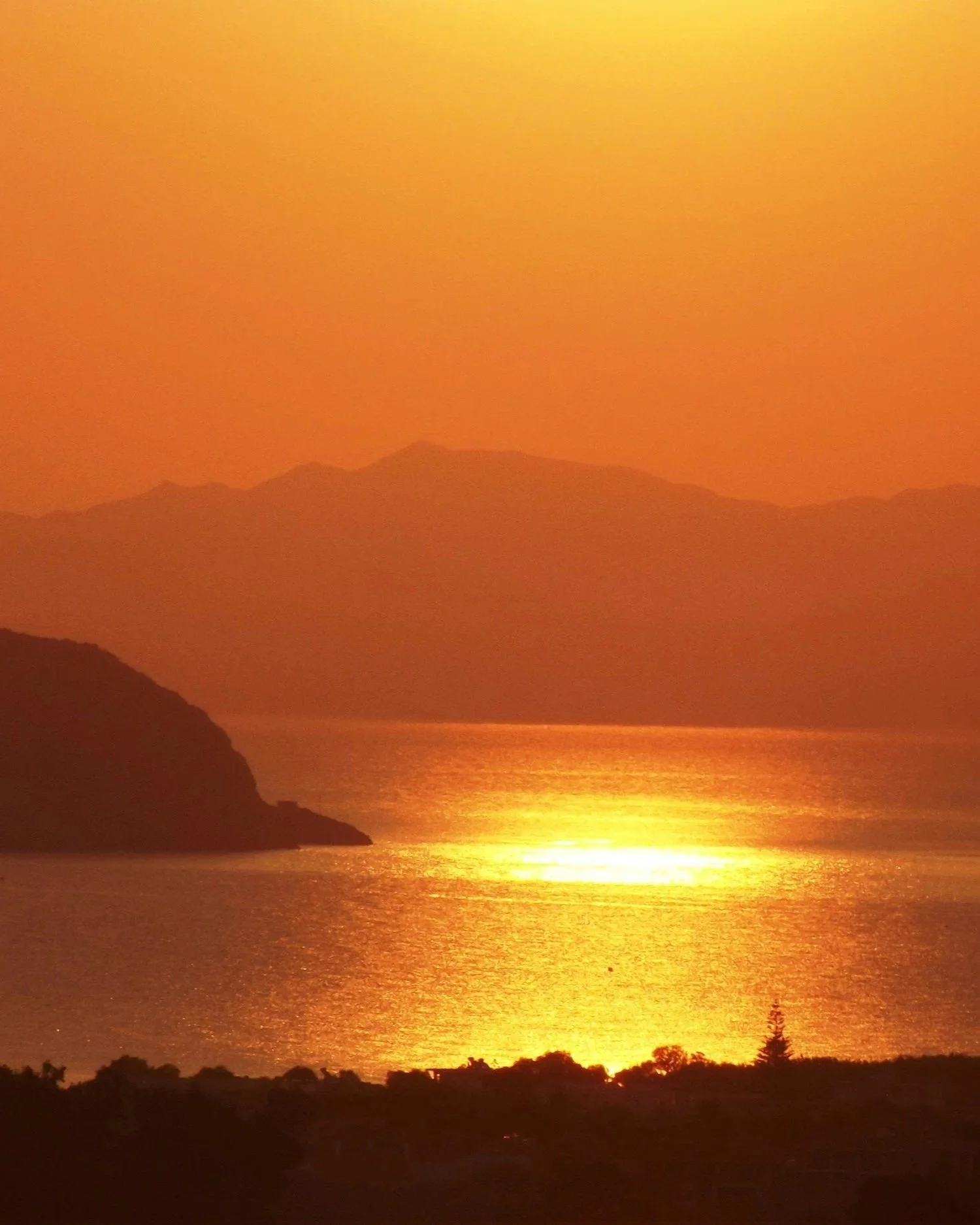
• dramatic winter sunsets
• Christmas decorations everywhere
While swimming is possible but becomes less common, the island’s landscapes remain beautiful and peaceful.
Weather Differences Across the Island
Because Crete is large and mountainous, the weather can vary significantly between regions.
In general:
• South Crete tends to be slightly warmer and sunnier
• mountains create cooler temperatures at higher elevations
• coastal winds can influence beach conditions
Travellers deciding where to stay often choose the south for its open landscapes and quieter atmosphere. Our guide to where to stay in South Crete explores the villages and regions along the Libyan Sea.
Choosing the Right Season
The best time to visit depends on what you want to experience.
Spring (March–May)
• wildflowers and orchids
• excellent hiking weather
Summer (June–August)
• warm sea and lively villages
• long beach days
Autumn (September–October)
• warm water and fewer visitors
• harvest season and festivals
Winter (November–February)
• quiet villages and dramatic landscapes
Experiencing the Island at Your Own Pace
No matter the season, Crete rewards travellers who take time to explore slowly.
Staying in one region allows you to experience the island’s landscapes and rhythms more deeply. Our STAYS Home Collection includes carefully selected villas across South Crete, offering a peaceful base for exploring beaches, villages and mountains throughout the year.
If you are considering this style of travel, our guide to villa holidays in Crete explains why many visitors prefer staying in a private home rather than moving between hotels.
Final Thought
Crete is a destination for every season.
Spring reveals flowers and green landscapes.
Summer brings warm seas and long evenings.
Autumn offers harvest celebrations and quieter beaches.
Winter shows the island’s calm and dramatic side.
Whenever you arrive, the island has a way of unfolding slowly — through its landscapes, its villages and the light over the Libyan Sea.
