
Driving in Crete: Road Rules, Customs & What Visitors Should Know
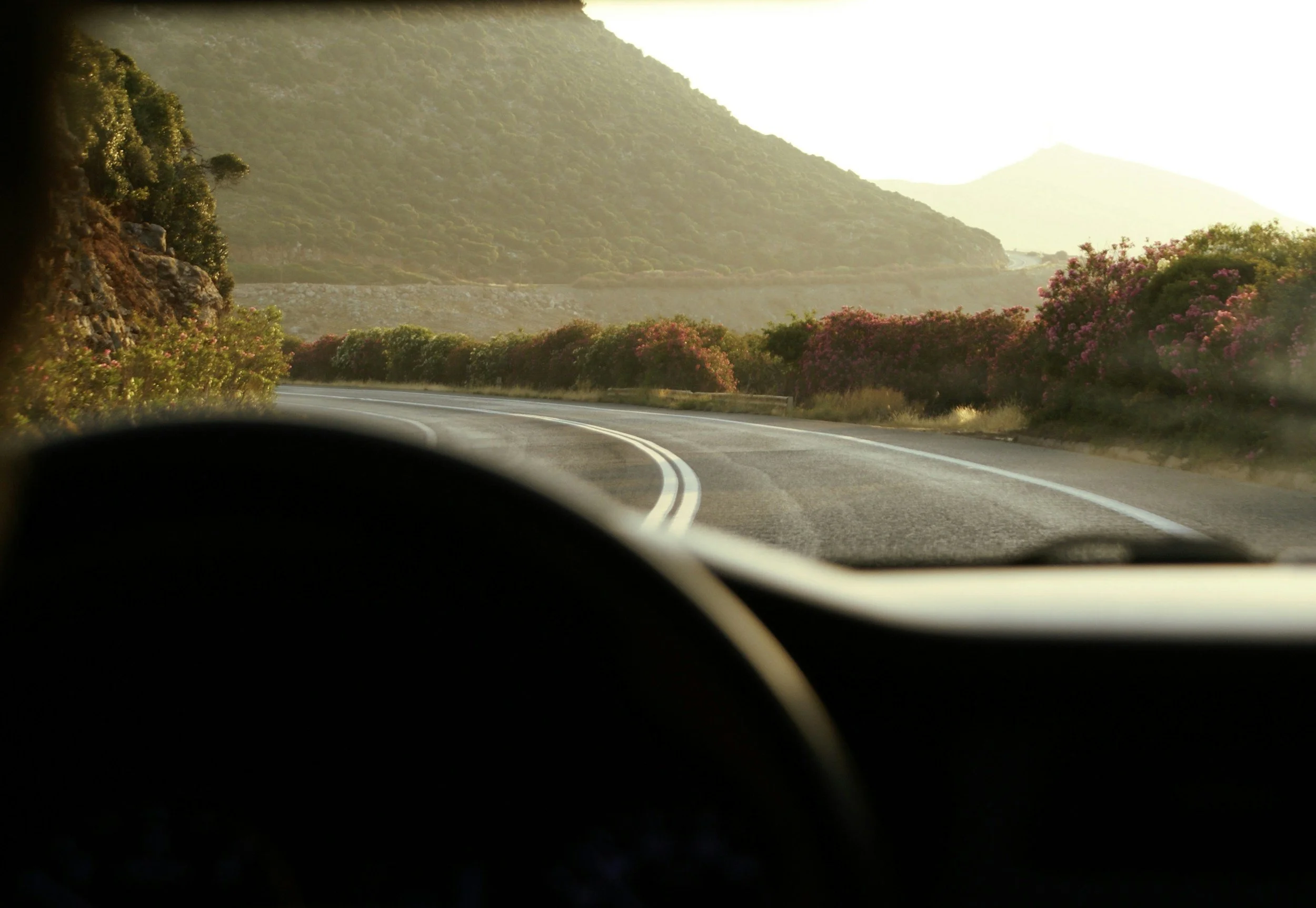
If you’re planning to explore South Crete by car, you may wonder:
Is driving in Crete difficult? Are there special road rules?
The reassuring answer: driving in Crete is straightforward — but it comes with a few local customs that are helpful to understand.
Here’s what to know before you get behind the wheel, but be sure to also read our entry about car rental scams in Crete.
ROAD COURTESY: KEEP RIGHT
If you notice cars driving far to the right side of the lane, it’s not bad driving — it’s courtesy.
On many single-lane rural roads, slower drivers move slightly to the right to allow faster cars to pass more easily. It’s an informal but widely practiced system that keeps traffic flowing smoothly.
If someone moves right in front of you, it’s usually an invitation to overtake when safe.
And if you are the slower driver? A small move to the right is appreciated.
RELAXING REFUELS
At gas stations in Crete, you don’t need to get out of your car.
An attendant will pump the fuel for you. Simply tell them how much you want (for example, “40 euros”) or say “full” for a full tank, and they’ll handle the rest.
It’s simple, efficient and pleasantly old-fashioned.
Speed Limits & Enforcement
Official speed limits are:
50 km/h in towns
90 km/h on open roads
100–130 km/h on larger highways
While locals may sometimes drive faster, speed cameras and police checks do exist, especially around large cities and during festivals and public holidays. It’s best to follow posted limits — especially on unfamiliar mountain roads.
Mountain Roads: Winding but Safe
South Crete is known for scenic mountain drives.
What to expect:
Curves and switchbacks
Narrower lanes in rural areas
Goats occasionally crossing
Stunning views at every turn
The roads are paved and maintained. Drive calmly, avoid rushing, and you’ll find the experience enjoyable rather than stressful.
Overtaking Culture
Overtaking is common — sometimes more confidently and in more risky spots than visitors expect.
Key points:
If someone approaches quickly from behind, they may be local and familiar with the road.
Use courtesy by allowing space when safe.
Do not feel pressured to drive faster than you are comfortable with.
Staying predictable and calm is the best approach.
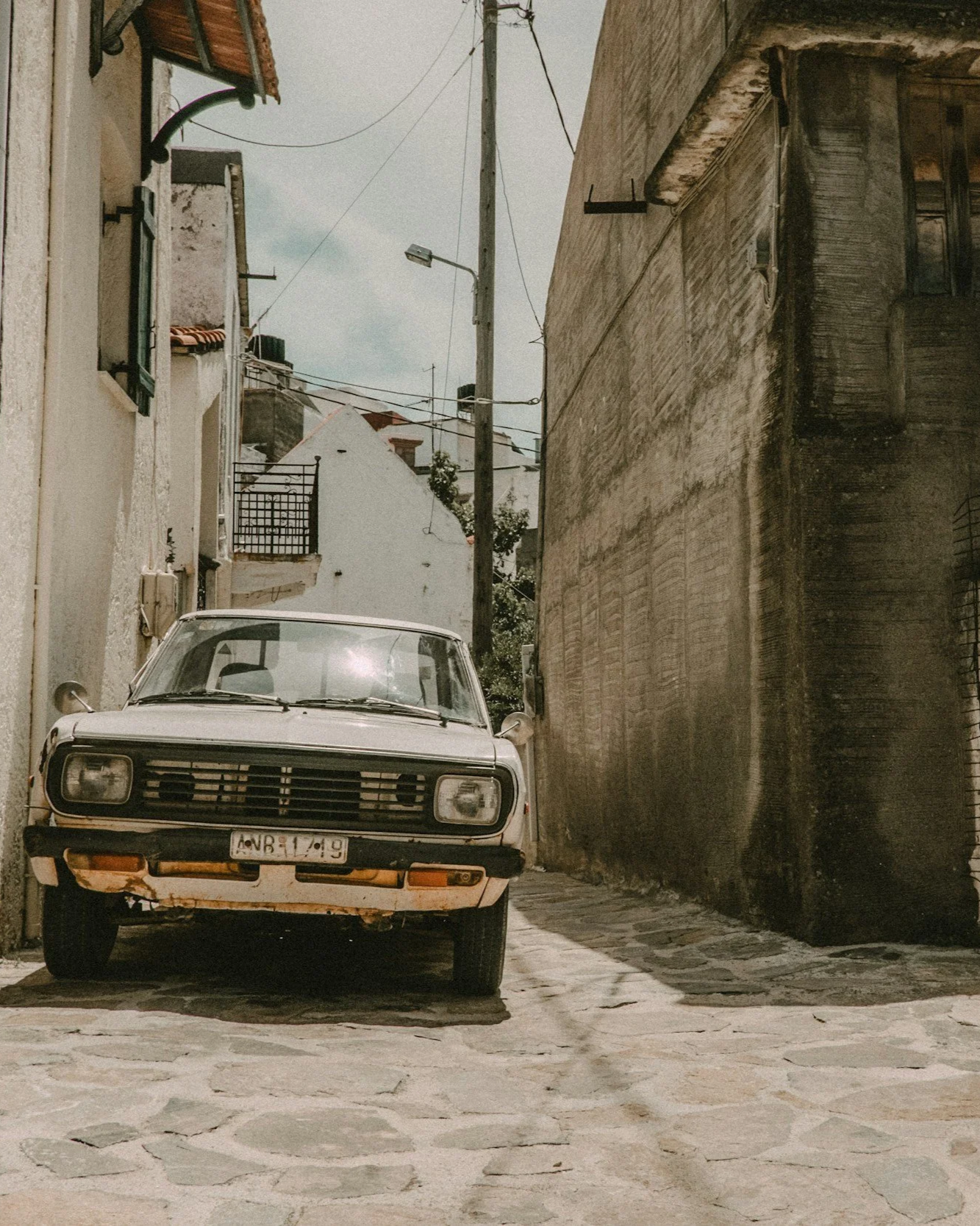
Parking in Villages
Village parking can be informal.
White lines = general parking
Yellow lines = no parking
Blue lines (in larger towns) = paid parking
In smaller South Crete villages, parking is usually relaxed and easy to find.
Always avoid blocking narrow streets — many are two-way even if they look single-lane.
Parking in Rethymno: What to Know
Parking in Rethymno — especially near the Old Town — can be challenging, particularly in high season.
The historic center was not designed for modern traffic, and streets are narrow.
Here are practical options:
Free Parking Near the Fortezza
Along the sea-facing road below the Fortezza (the Venetian fortress), you’ll often find free roadside parking. Availability varies, but with a little patience, spots usually open up — especially outside peak evening hours.
Port Parking (Free & Paid Options)
Near the harbor, there are both paid and limited free parking areas. This is one of the most convenient options for exploring the Old Town on foot.
City Parking (App Required)
Within central Rethymno, many paid parking spots operate via a digital system. Each space has a number, and you must install the designated parking app to enter the spot number and pay online. It’s straightforward once set up — but downloading the app in advance saves time.
Practical Tip
If visiting in summer:
Arrive before 10:00 AM or after 7:00 PM for easier parking
Avoid driving directly into the narrow Old Town streets
Consider parking once and exploring on foot
Once parked, Rethymno is best enjoyed slowly — wandering alleys, discovering small cafés and watching the light change over the harbor.
Seatbelts & Mobile Phones
Seatbelts are mandatory for all passengers.
Using a mobile phone while driving without hands-free is illegal.
Fines can be significant.
Roundabouts & Right of Way
In many roundabouts in Crete, vehicles already inside have priority — but signage varies.
Approach cautiously, observe local behavior and follow posted signs.
At rural intersections without signs, the vehicle coming from the right typically has priority.
Rural Roads & Insurance Awareness
In South Crete, some of the most beautiful beaches and viewpoints are accessed via smaller rural roads.
However, some low-cost rental companies restrict driving off main or paved roads and may track vehicle movement. Violating such conditions can lead to penalty fees.
Choosing a reputable rental provider with full insurance coverage avoids unnecessary stress and gives you the freedom to explore confidently.

Extra Caution on Public Holidays & Late Nights
Like in many Mediterranean regions, celebrations in Crete can be lively — especially during public holidays, village festivals and summer weekends.
While drink-driving laws in Greece are strict and enforcement has increased in recent years (especially around Chania following a recent scandal), it is wise to exercise extra caution when driving late at night, particularly on holiday evenings or after major events.
Drive defensively.
Avoid rushing.
Keep a safe distance.
Awareness — especially after dark — is always advisable.
Driving Style: Confident but Not Aggressive
Cretan driving can feel:
Direct
Efficient
Slightly faster-paced
But it is rarely hostile.
A relaxed attitude, clear signaling and steady speed go a long way.
Is Driving in Crete Safe?
Yes — provided you:
Drive defensively
Respect speed limits
Avoid distractions
Take your time on mountain roads
Traffic volume in South Crete is significantly lower than in major European cities, which many visitors find surprisingly comfortable.
For a broader perspective on how different regions on the island influence travel logistics and daily rhythm, our guide to villa holidays in Crete compares north and south in more detail.
Final Thought
Driving in Crete is less about strict rule-following and more about understanding rhythm and courtesy.
Keep right when appropriate.
Refuel without leaving your seat.
Allow space.
Drive calmly.
With a little awareness of local customs, exploring South Crete by car becomes one of the highlights of your holiday — not a source of stress.
If you are planning your stay and want to base yourself where exploration feels effortless, you can browse our available villas in the Home Collection and choose a setting that matches your preferred pace.
