
Raki in Crete: History, Culture & Why It’s Not the Same as Tsipouro, Ouzo or Turkish Rakı
In Crete, raki is not just a drink.
It is a welcome gesture, a peace offering, a celebration ritual and a symbol of identity. Refusing it can feel almost impolite. Accepting it means you are no longer a stranger.
But what exactly is Cretan raki? And why is it not the same as tsipouro, ouzo or Turkish rakı?
To understand raki, you must understand Crete itself — an island shaped by Venetians, Ottomans and Greeks, all leaving traces behind.
Experiencing these layers firsthand often reshapes what a villa holiday in Crete can become — less about sightseeing, more about participation.
Where Cretan Raki Comes From
Cretan raki — called tsikoudia in the rest of Greece — is a clear, strong grape distillate made from the leftover pomace of winemaking (skins, seeds and stems).
Its production as we know it today was strongly shaped during Venetian rule (1204–1669). The Venetians were skilled wine merchants and distillers, and they helped structure and refine grape cultivation and distillation practices on the island.
So while raki feels deeply Cretan, its technique carries Mediterranean layers — especially Venetian influence.
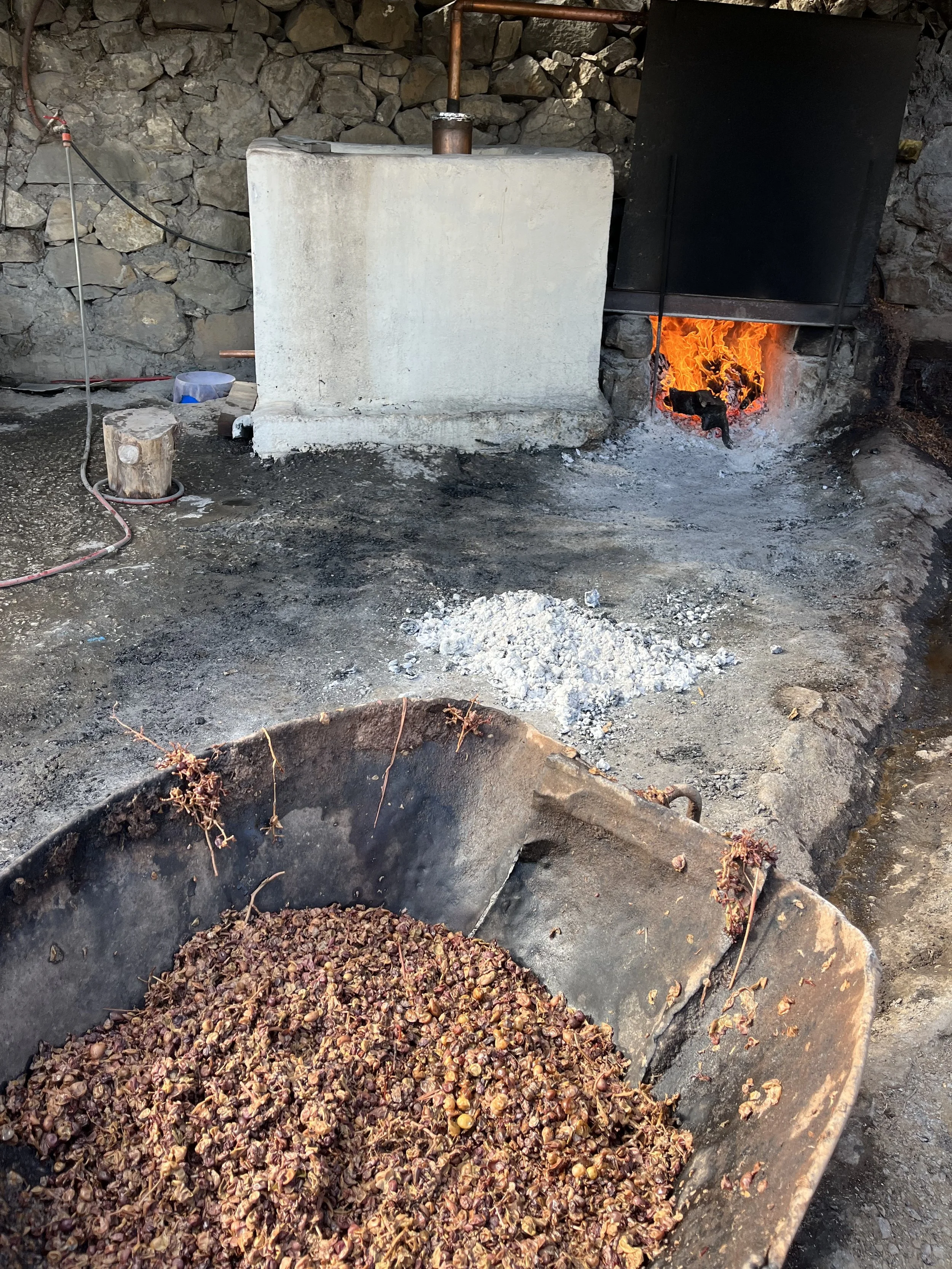
After the grape harvest each autumn, villages begin the kazani — the communal distillation process using traditional copper stills. Families gather. Friends bring food. Music plays. Fresh raki flows straight from the still.
It is not industrial.
It is seasonal, agricultural and social. And it will never taste as good as in the company of villagers who bring their own red barrels containing pomace from their own grapes to the local distillery and wait for the first freshly distilled
The Word “Raki”: Arabic Roots, Ottoman Journey
The word “raki” does not come from Venice. It comes from the Arabic word “araq”, meaning “distillate” — literally, “that which is distilled.”
Across the Eastern Mediterranean, variations of this word were historically used to describe strong distilled spirits in general.
During the centuries of Ottoman presence in the region — including in Crete (1669–1898) — the word spread further and evolved linguistically.
Over time:
In the Ottoman Empire, rakı became specifically associated with the anise-flavored national drink.
In Turkey today, rakı refers almost exclusively to this anise spirit.
Only in Crete, however, the word “raki” remained attached to the local, unflavored grape distillate.
Officially in Greece, the drink is called tsikoudia. But in everyday language, Cretans still say “raki.”
So Cretan raki reflects two histories at once:
A Venetian-influenced distillation tradition
An Arabic-rooted word shaped by Ottoman history
It is a perfect example of how Crete absorbs influences and turns them into something uniquely its own.
Raki vs. Tsipouro
Tsipouro is mainly produced in mainland Greece and is also distilled from grape pomace.
However:
Tsipouro is sometimes made with anise
It varies widely by region
It is often commercially standardized
Cretan raki (tsikoudia) is traditionally:
Always unflavored
Dry and clean
Consistently grape-based
Closely tied to village production
On paper they may seem similar. In culture, they are not. Tsipouro is a spirit. Raki is a social bond.
Raki vs. Ouzo
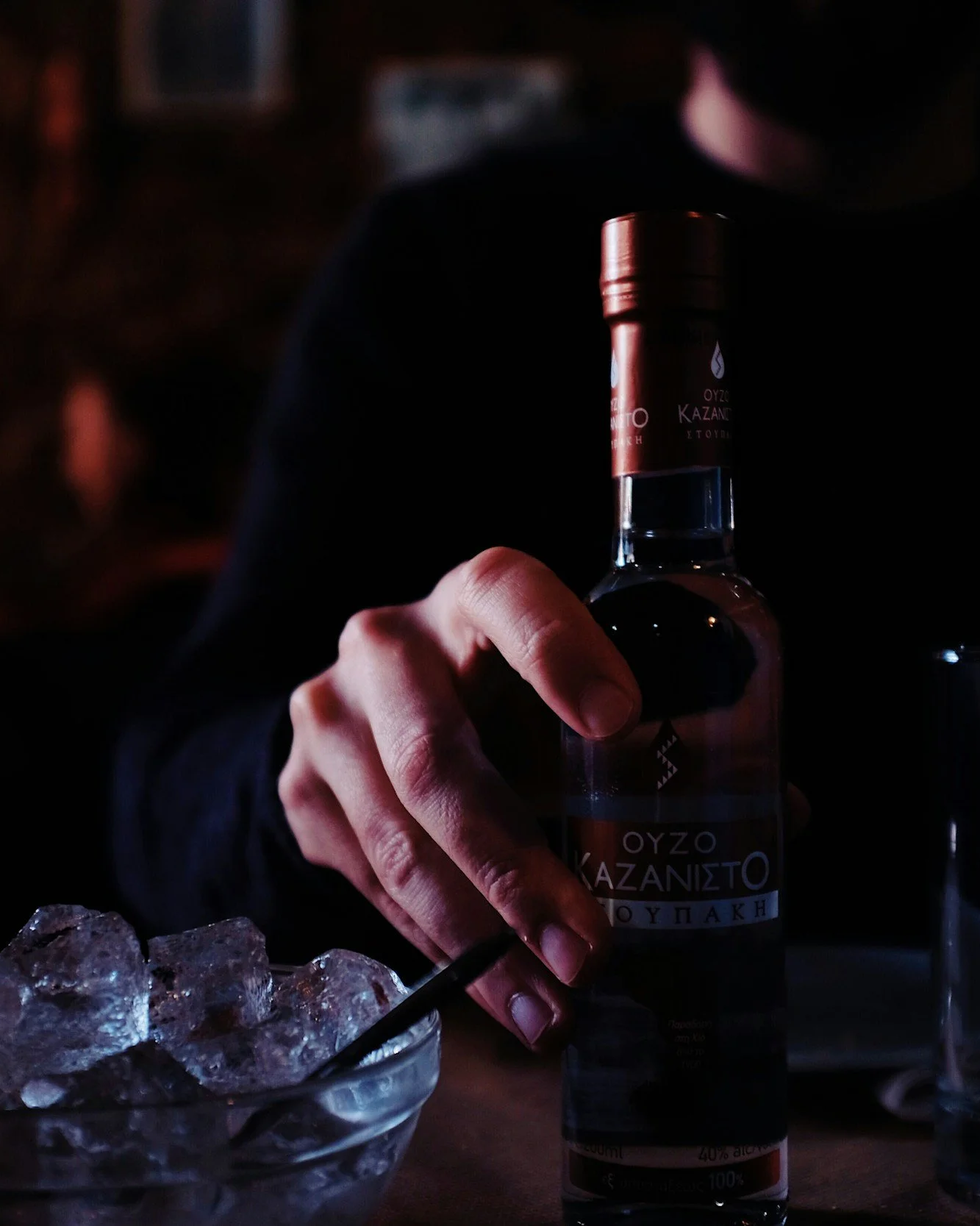
Ouzo is completely different.
Ouzo:
Is anise-flavored
Turns milky white when mixed with water and ice (common way to drink it)
Is industrially produced
Has a sweeter aromatic profile
Cretan raki:
Contains no anise
Remains crystal clear
Is sharper and more neutral
Is usually locally distilled
If it tastes like licorice, it is not Cretan raki.
Raki vs. Turkish Rakı
Despite the similar name, Turkish rakı differs significantly.
Turkish rakı:
Is heavily anise-flavored (similar to Ouzo)
Is diluted with water before drinking
Turns white when mixed
Is central to structured meze dining traditions
Cretan raki:
Is never flavored
Is not diluted
Does not turn milky
Is rooted in agricultural village life
The shared name reflects linguistic history — not identical recipes.
Not to get side-tracked, but what then are the differences between Turkish rakı and Ouzo?
Because of the similar names and the milky transformation when water is added, Turkish rakı and Greek ouzo are often confused. Yet they differ in production, strength and cultural meaning.
Turkish rakı is traditionally redistilled from grape-based alcohol and flavored with anise. It is usually stronger (around 45–50% alcohol) and almost always diluted with water. It plays a central role in long, ritualized meze dinners and is considered Turkey’s national drink.
Ouzo, by contrast, is typically made from neutral alcohol that is then flavored with anise and other botanicals such as fennel or coriander. It can be slightly lighter and more aromatic. In Greece, ouzo is often enjoyed casually — by the sea, in the afternoon, or as an aperitif.
Both turn cloudy white when mixed with water due to the anise oils — but culturally they feel different.
And importantly:
Neither of them is the same as Cretan raki (tsikoudia), which contains no anise at all and remains crystal clear.
The Cultural Importance of Cretan Raki
In Crete, raki symbolizes:
Hospitality
Trust
Equality
Independence
Continuity
It appears at weddings, baptisms, funerals, saint festivals and everyday meals. Often it is offered without being ordered — sometimes without being charged.
Even during difficult periods of history — wars, occupations, political turmoil — village distillation continued. Raki became part of the island’s resilience.
Offering raki is offering inclusion.
The Kazani: Where Culture Comes Alive
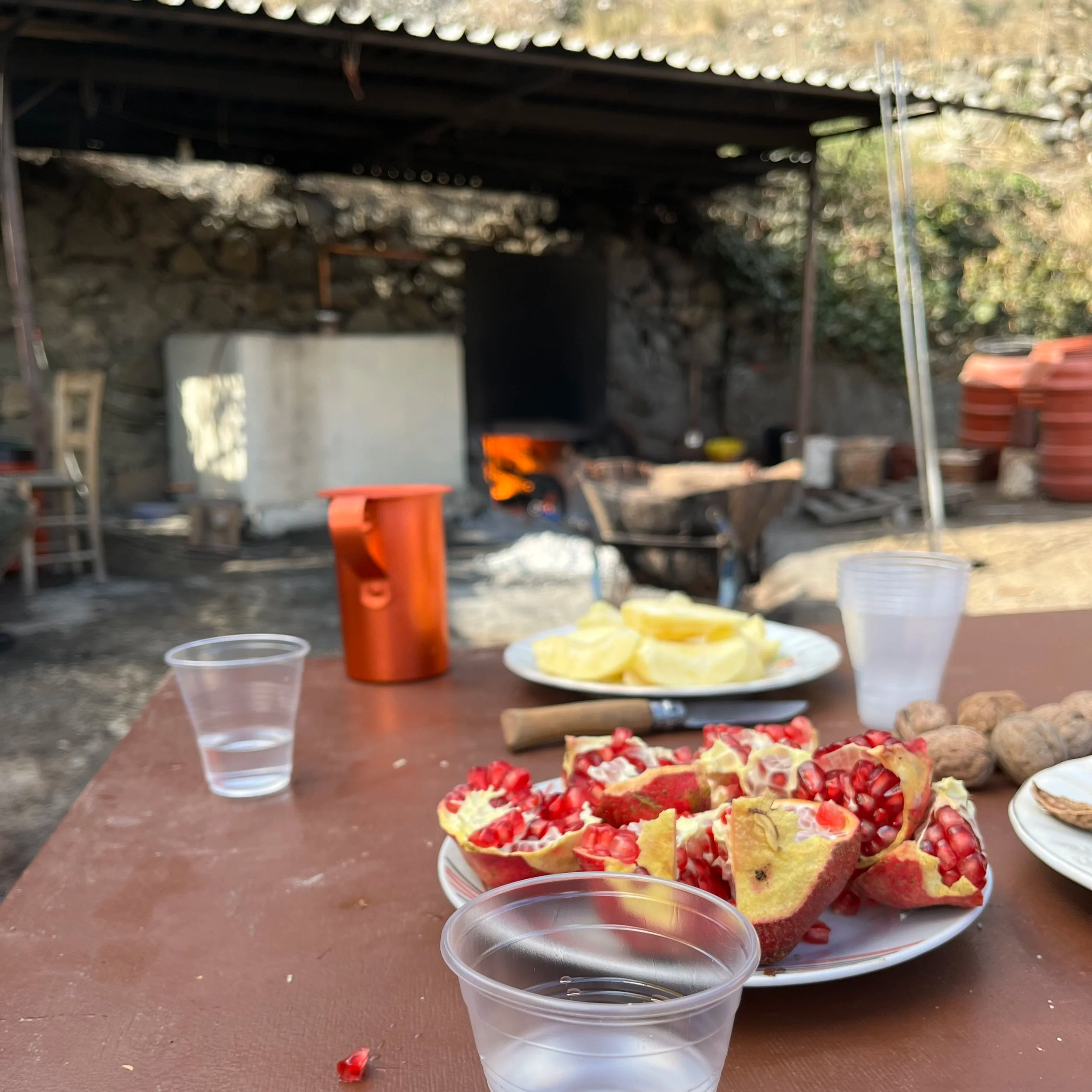
If you want to experience Cretan culture at its most authentic, visit in October or November during kazani season. Guests staying in one of our rental homes during kazani can simply ask our team — we’re happy to get you an invitation!
Expect:
Raki flowing warm from copper stills
Plates of grilled meat and local cheese
Live lyra music
Dancing deep into the night
Open invitations from people you just met
It is informal. Generous. Real.
More Than a Drink
Cretan raki carries Venetian technique.
Its name carries Arabic roots shaped by Ottoman history.
Its spirit carries Cretan identity.
It is not tsipouro.
It is not ouzo.
It is not Turkish rakı.
It is something older and simpler — a clear distillate born from grapes, fire and community.
And once you’ve shared a glass under an autumn sky in a village courtyard, you will understand:
Raki is not about alcohol.
It is about belonging.
