
Is Crete Safe? A Practical Guide for Couples & Families
If you’re planning a holiday in Crete, you may be wondering:
Is Crete safe for tourists?
Is it safe for couples, minorities, families or solo travelers?
The short answer is yes — Crete is considered one of the safest destinations in Greece and the wider Mediterranean.
But like any place, it helps to understand the local context.
Here’s a practical, honest guide.
General Safety in Crete
Crete has:
Very low violent crime rates
A strong sense of local community
A culture of hospitality (philoxenia)
Serious crime affecting tourists is rare. Visits are entirely incident-free.
In smaller towns and villages — especially in South Crete — the atmosphere is relaxed and personal. Locals often know each other, which naturally supports a feeling of security. Many don’t even lock their front doors when leaving the house.
Is Crete Safe for Couples?
Yes — very much so.
Couples often appreciate:
Calm evening promenades
Safe village centers
Quiet beaches
Low levels of harassment
South Crete in particular feels peaceful rather than party-oriented.
Late-night walks in village centers or along the harbor are generally comfortable and uneventful.
Is Crete Safe for Families?
Crete is highly family-friendly.
Reasons include:
Low violent crime
Welcoming attitude toward children
Relaxed restaurant culture
Safe swimming beaches (with normal sea awareness)
Children are warmly received in tavernas and public spaces.
As always, basic supervision near water and roads is essential.
Is Crete Safe at Night?
Yes.
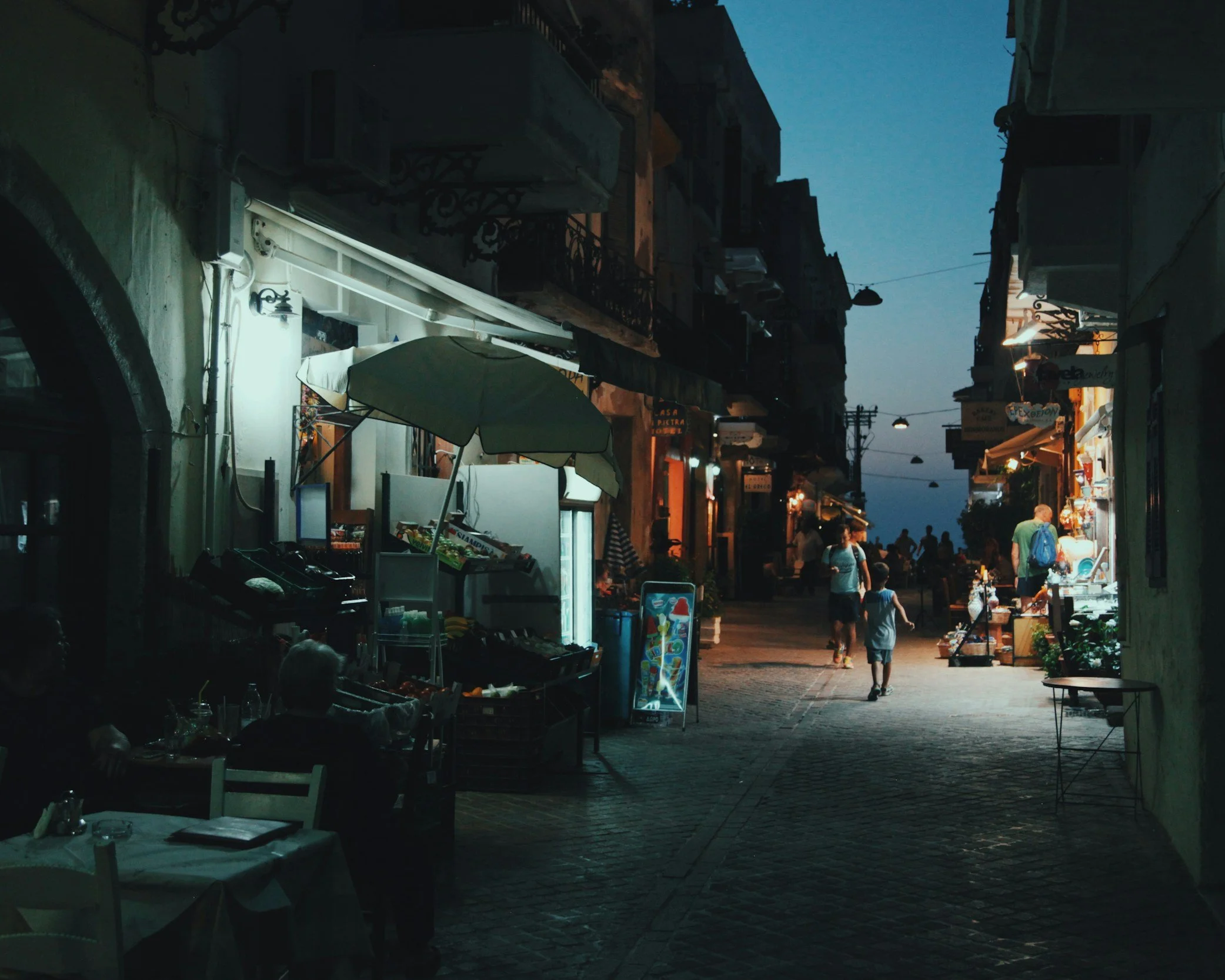
Village centers, harbors and restaurants remain lively but calm in the evenings.
In larger cities like Heraklion or Chania, normal urban awareness applies — but Crete does not have a reputation for dangerous nightlife districts.
South Crete is particularly peaceful after dark.
What About Pickpocketing?
Compared to major European capitals, pickpocketing is relatively rare in Crete.
However:
Use normal precautions in busy tourist areas
Keep valuables secure in Old Town centers
Avoid leaving bags unattended
Basic travel awareness is sufficient.
Road Safety
Driving in Crete is generally safe, though roads can be winding in mountain areas.
Traffic volume in South Crete is low compared to many European destinations.
Extra caution is advisable at night and during public holidays, as driving styles can vary. Defensive driving and patience go a long way.
(For a full guide, see our detailed article on driving in Crete.)
Healthcare & Medical Access
Crete has:
Public hospitals in Heraklion, Chania and Rethymno
Health centers in regional towns
Private medical clinics
For most minor issues, medical assistance is accessible and professional.
Travel insurance is recommended, as in any destination.

Is Crete Safe for LGBTQ+ Travelers?
Crete — especially in the south — is generally welcoming and discreetly tolerant.
While not a major party destination, South Crete is appreciated by many LGBTQ+ couples for its relaxed atmosphere and absence of intrusive nightlife culture.
As in most Mediterranean regions, discretion in very small rural villages may be sensible — but overt hostility toward visitors is uncommon.
Natural Safety Considerations
The primary risks in Crete are natural rather than criminal:
Strong sun in summer
Occasional wind
Rocky terrain on hikes
Sea conditions that require awareness
Respecting the climate and landscape is more important than worrying about crime.
So, Is Crete Safe?
Yes.
Crete is widely regarded as a safe, welcoming and relaxed destination for couples, families and thoughtful travelers.
Normal travel awareness is sufficient. That sense of ease is one of the defining characteristics of villa holidays in Crete, where space and privacy often replace crowds and noise.
If you are considering a STAY, you can explore our current availability in the Home Collection and choose a setting that reflects this quieter rhythm.
For many visitors, that sense of ease is one of the island’s greatest luxuries.
