
Sahara Dust in Crete: Why the Sky Turns Red (and What It Means for Your Holiday)
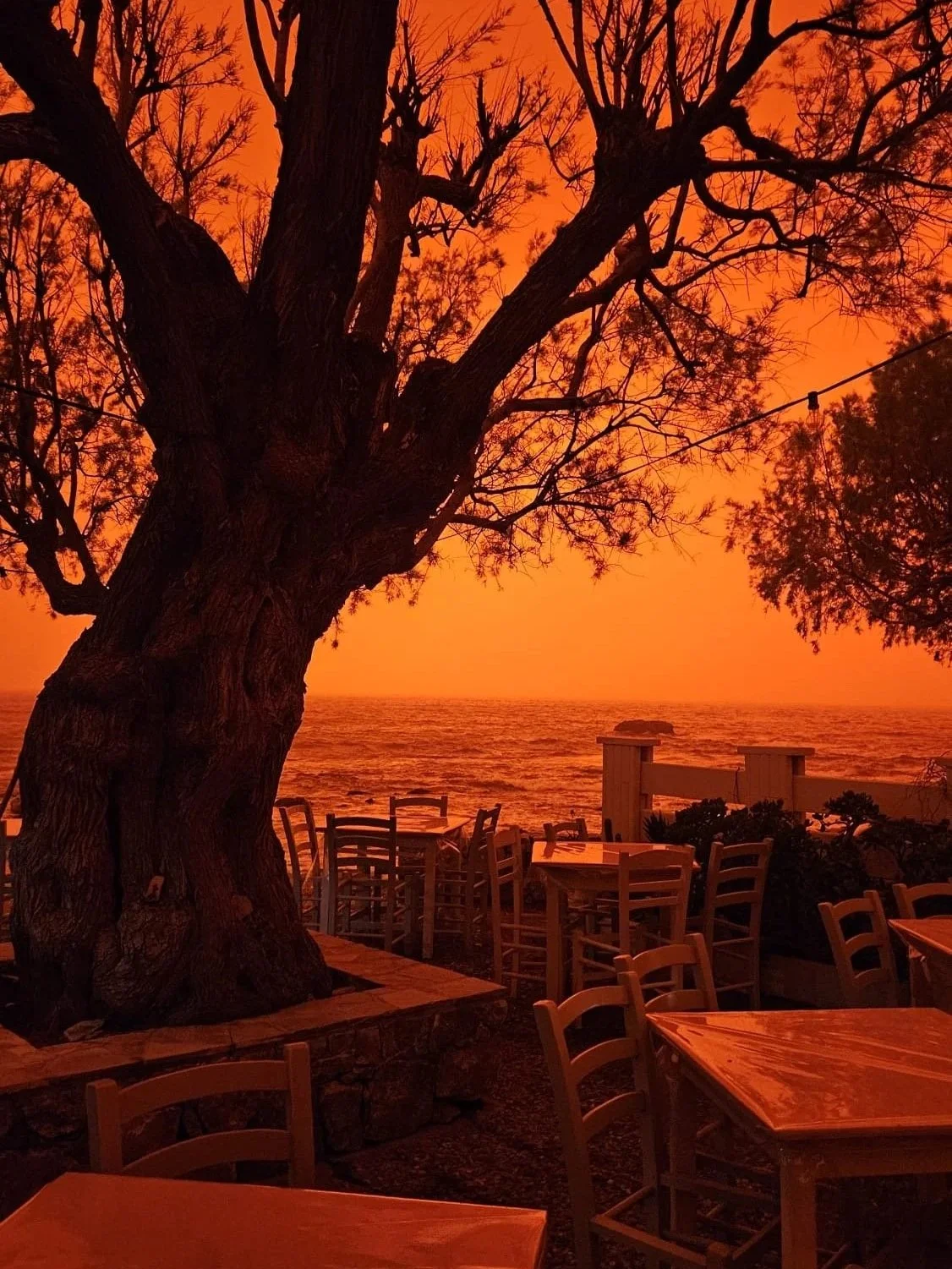
If you’ve recently seen images of Crete bathed in a deep red glow, you’re not alone.
When Sahara dust reaches the island, the landscape can transform almost overnight — skies turn amber, the air feels heavier, and the light takes on an almost surreal intensity.
It’s as if North Africa leans in to kiss Crete, leaving behind a warm, red imprint in the sky and the landscape.
Even locals were surprised this time.
One of our partners told us his 78-year-old father had never seen the sky this red before.
It’s a striking phenomenon. But it’s also widely misunderstood.
For travelers planning a holiday in Crete, the real question is simple:
Does Sahara dust affect your stay?
The short answer: not in the way you might think.
What is Sahara Dust — and Why Does It Reach Crete?
Especially from late March to early June, strong southern winds carry fine sand particles from the Sahara Desert across the Mediterranean.
These events are the result of large-scale atmospheric movements between North Africa and the Eastern Mediterranean. When low-pressure systems form over the central or western Mediterranean, they often pull warm air masses northward from the Sahara Desert. These air currents carry extremely fine desert particles — sometimes thousands of kilometers — across the sea towards Greece.
At higher altitudes, strong southern winds transport the dust toward Crete, where it becomes visible as a hazy sky, reduced visibility, and — in more intense cases — the deep orange or red glow that recently covered the island. These winds are known internationally as Sirocco, which derives from the Arabic šurūq, related to the East.
Humidity plays an important role. When moisture mixes with these dust particles, the effect becomes even more dramatic:
The sky appears thicker and more saturated in color
Sunlight is filtered into warm orange and red tones
In some cases, the dust returns to the ground as “mud rain”, leaving a fine layer of sand on cars, terraces, and pools.
These events usually last a few hours to a couple of days before the air clears again.
Crete, sitting at the southern edge of Greece, is one of the first places this dust arrives. If you’re planning your trip around seasonal conditions, you might also want to read our guide on when to visit Crete.
How Unusual Was This Event?
While Sahara dust itself is not rare, the intensity varies significantly.
Most years, Crete experiences several mild episodes that pass almost unnoticed.
But the deep red skies seen recently were exceptional — even by local standards.
In other words:
It’s a natural phenomenon — but this particular event was stronger than usual.
Does Sahara Dust Affect Your Holiday?
For most travelers, the impact remains limited.
Daily life continues as normal
Flights and infrastructure are rarely affected (see our full guide on flights to Crete in 2026)
Restaurants, beaches, and experiences remain open
You might notice:
slightly hazy views for a day
warmer temperatures
or a softer, diffused light
In rare cases, dust combined with rain can leave visible residue — especially on outdoor surfaces.
But even then, it’s typically temporary and quickly resolved.
If you’re generally wondering about current travel conditions, you can also read our detailed article on whether Crete is safe to visit right now.
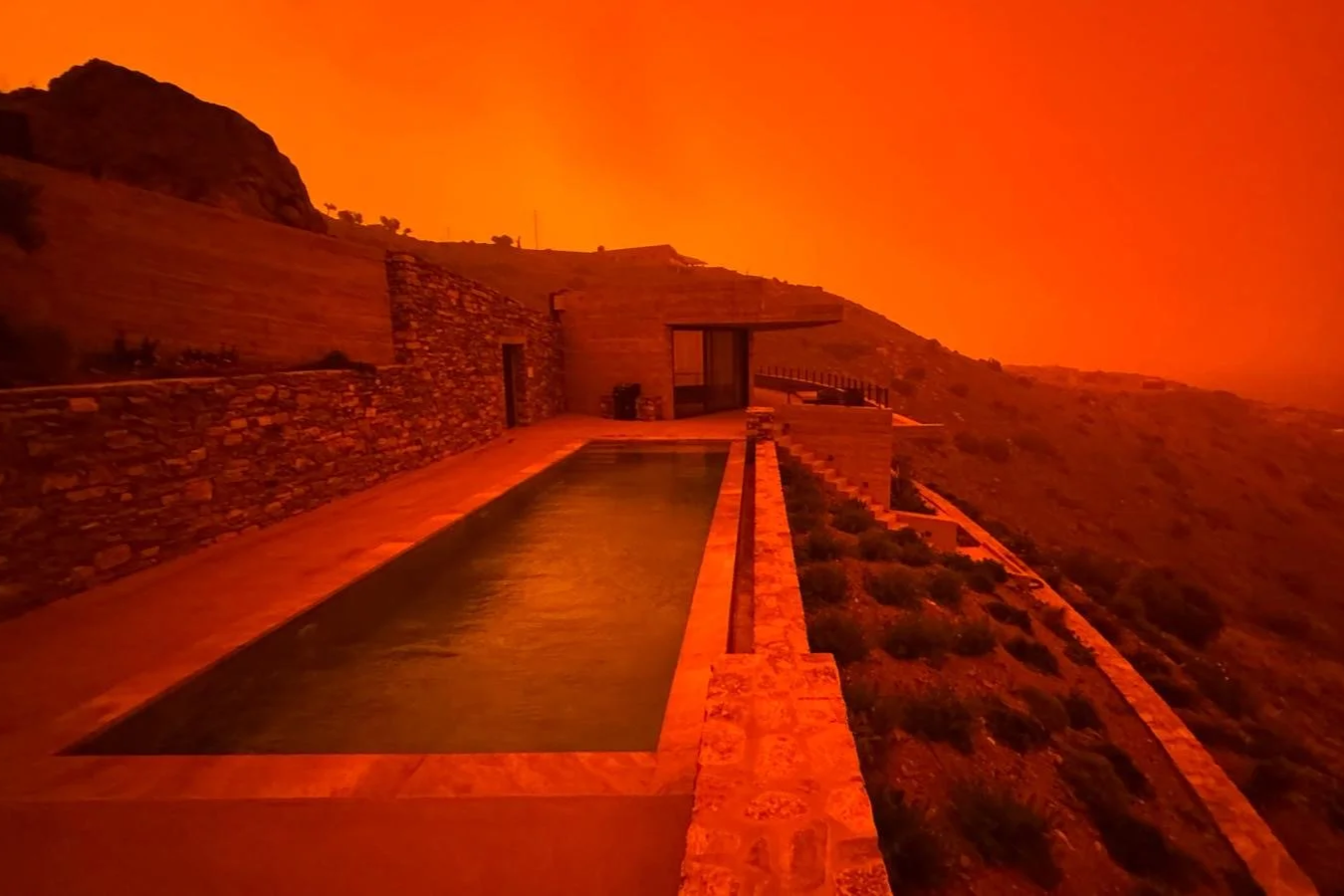
Pools and Outdoor Spaces
This is where experience makes a real difference.
Sahara dust — especially when combined with rain — can affect swimming pools, as the fine particles are difficult for standard filtration systems to handle.
In many cases, properties resort to emptying the pool entirely to restore water clarity.
At STAYS, we take a different approach.
Using a siphon-based cleaning method, we remove the fine dust efficiently while minimizing water loss and avoiding unnecessary strain on the pool system.
This allows pools to return to perfect condition quickly — often within the same day.
For our guests, this means:
minimal disruption, even after a dust event
Is It Safe to Be Outside?
Yes.
Sahara dust is a natural phenomenon and generally harmless for healthy individuals.
Those with respiratory sensitivities may choose to:
limit intense outdoor activity during peak conditions
stay indoors temporarily if the air feels heavy
For most visitors, however, it remains a short-lived atmospheric change rather than a concern.
Does It Affect South Crete Differently?
Yes — and often in a subtle but positive way.
South Crete tends to feel:
more open and ventilated
less humid
and generally more comfortable during shifting weather conditions
It’s also one of the reasons many travelers specifically look into where to stay in South Crete, especially when seeking space, privacy, and a calmer atmosphere.
Even during dust events, the region’s spacious villas and slower pace allow you to adapt your day easily — whether outdoors or inside.
A Different Way to Experience Crete
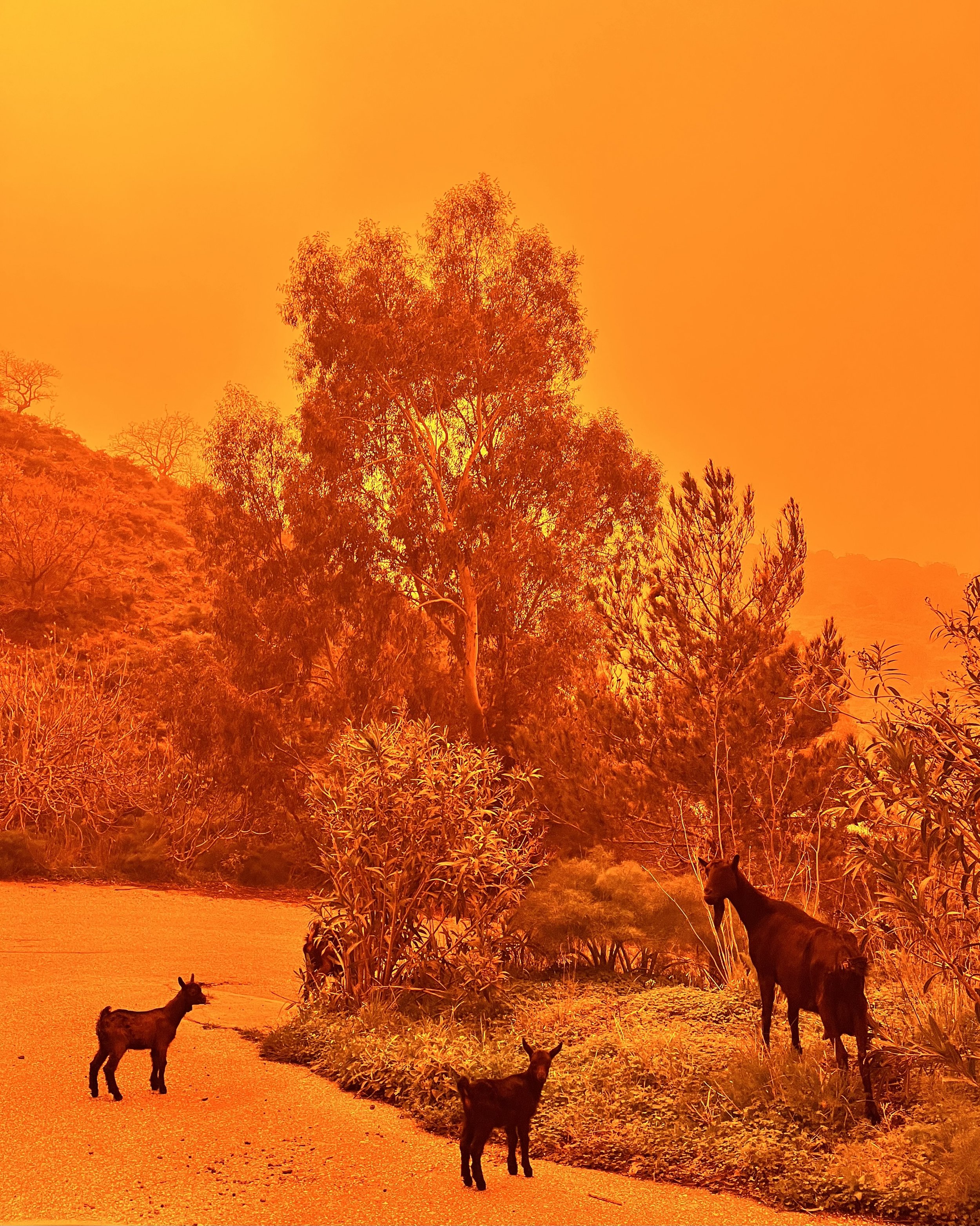
While it may look dramatic in photos, Sahara dust doesn’t define your stay — it simply adds another layer to the island’s natural rhythm.
In fact, many guests experience it as:
a unique, almost cinematic atmosphere
unusually warm evenings
and a reminder of Crete’s connection to Africa and the wider Mediterranean
And just as quickly as it arrives, it disappears — often revealing clear skies again the next day.
Planning Your Stay in Crete
If you’re considering a trip, there’s no need to plan around Sahara dust.
Instead, focus on what truly shapes your experience:
where you stay
how much space and privacy you have
and how seamlessly everything is managed behind the scenes
Explore our handpicked holiday homes in South Crete — private, quiet, and designed for exactly this kind of effortless flexibility.
The Bottom Line
Sahara dust may briefly change the color of the sky —
but it doesn’t change what makes Crete special.
Daily life continues. The sea remains. The experience stays intact.
And sometimes, it even leaves you with a story you didn’t expect.
