
Is Crete Safe? The Iran War, Regional Tensions and What Travelers Should Know
Update — June 2026: Peace talks concluded
Following diplomatic negotiations, a ceasefire agreement between the parties involved in the Iran conflict was reached in June 2026. The geopolitical situation that prompted this article has largely resolved.
We are keeping this article live because the broader question it addresses — whether Crete is a safe destination during periods of regional uncertainty — remains relevant beyond any single crisis. The answer, as this article explains, has always been the same: yes. Crete's distance from the Middle East, its position within the European Union and NATO, and the resilience of its tourism infrastructure mean that the island has continued to welcome visitors normally throughout.
If you are planning a trip to Crete, our Home Collection and South Crete travel guide are the natural places to start.
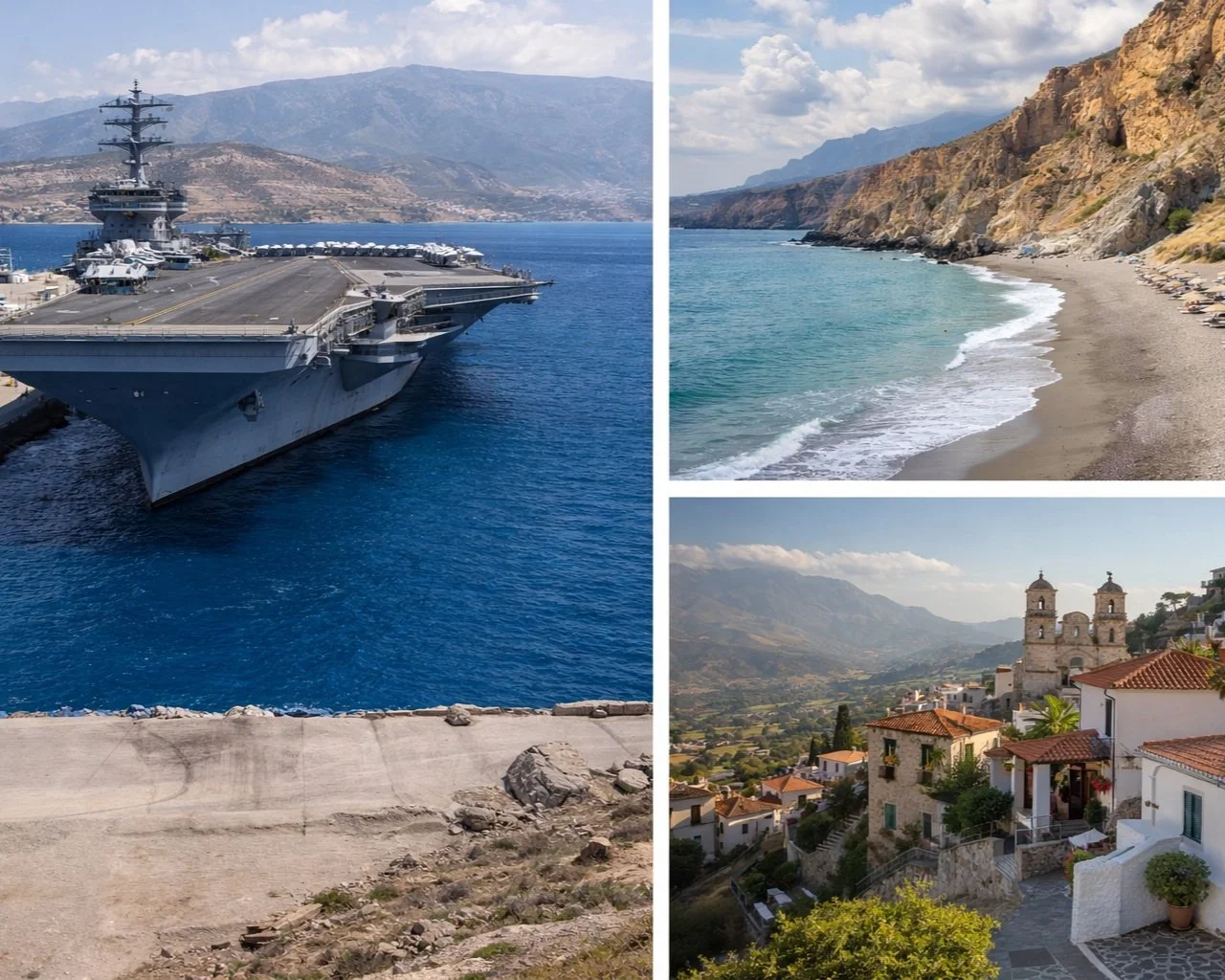
Crete remains safe to visit. The island is more than 2,000 km away from Iran and unaffected by the conflict. Daily life, tourism, and flights continue as normal.
The war involving the United States, Israel, and Iran has quickly become one of the most significant geopolitical crises in the Middle East in recent years. Missile strikes, military deployments, rising oil prices, and airspace restrictions across parts of the region dominate international headlines.
For travelers planning a Mediterranean holiday, this naturally raises an important question: Is Crete safe to visit during the Iran war?
The short answer is yes.
Crete is geographically distant from the conflict and part of Greece and the European Union — one of the most stable regions in the world. Tourism infrastructure on the island, including airports, beaches, and accommodation, operates as usual. While the situation may influence global aviation routes or fuel prices, visitors to Crete are unlikely to experience any direct impact.
Many travelers asking this question are not cancelling — they are simply choosing carefully.
Answering concerns about safety requires looking calmly at the realities rather than reacting only to headlines. Several key factors matter when evaluating travel to Crete right now:
geography and distance from the conflict
the NATO naval base at Souda Bay
airline routes and potential airspace disruptions
economic effects such as rising oil prices
When these elements are examined individually, the overall picture becomes much clearer.
For travelers who look beyond the headlines — and most do — choosing the right place to stay makes all the difference. Our handpicked holiday homes in South Crete are private, calm, and far from crowded areas.
Update – March
Recent developments in the Middle East continue to be closely monitored, but there are currently no indications that the conflict poses any direct threat to Greece or Crete.
European and NATO countries have emphasized that they do not intend to become militarily involved in the conflict, and Greece remains geographically distant from the main areas of tension. Tourism demand for Greece also remains strong, with major operators confirming continued bookings for the upcoming season.
For visitors, Crete continues to be regarded as one of the safest and most stable destinations in the Mediterranean.
Update (27 March 2026): On 23 March, the USS Gerald R. Ford temporarily returned to Souda Bay in Crete for maintenance and repairs following a non-combat incident. The stay was brief, and the vessel departed only four days later for Croatia. The restricted shore access for crew were precautionary and partly related to negative local public sentiment around the war and the role of Souda Bay. Cretans remain clearly oriented toward stability and non-involvement. For travelers, this remains a behind-the-scenes development rather than something visible or relevant during a holiday in Crete.
Update – February
Since this article was first written, the U.S. aircraft carrier USS Gerald R. Ford, which had briefly stopped at the NATO naval base in Souda Bay, has already left Crete and continued its deployment toward the eastern Mediterranean and the Middle East.
The visit was temporary and part of broader U.S. naval operations in the region. Souda Bay regularly serves as a logistical stop for NATO vessels, and the presence of ships there does not affect everyday life or tourism on the island.
Quick Answer: Is Crete Safe to Visit Right Now?
Yes. Crete remains more than 2,000 kilometers away from the current war zone involving Iran and is part of Greece and the European Union. Daily life on the island continues normally, and tourism infrastructure — including airports, beaches, and accommodation — operates as usual.
While the conflict may affect global aviation routes and oil prices, travelers visiting Crete are unlikely to experience any direct impact beyond potential increases in flight costs.
For travelers considering a holiday, the most practical step is simply to stay informed and book flights early if oil prices continue to rise.
Now for the more comprehensive answer:
How Far Is Crete From the Conflict?
Crete lies far from the current war zone.
The distance between Iran and Crete is roughly 2,100–2,200 kilometers, depending on the location used as reference. The island sits in the southeastern corner of the European Union, in the Mediterranean Sea between mainland Greece and North Africa.
To put that distance into perspective:
• Crete to Tehran: about 2,200 km
• Crete to central Europe: roughly 2,000 km
• Crete to Israel: around 900 km
While maps often make the Eastern Mediterranean appear geographically close to the Middle East, Crete remains firmly within European territory and far from areas where military activity is taking place.
Daily life on the island us not affected. Beaches, villages, restaurants, archaeological sites, and hiking trails operate exactly as they do every year.
For travelers arriving in Crete, the atmosphere feels very far removed from the geopolitical events dominating international news.
Souda Bay and the USS Gerald R. Ford
Another topic that appears frequently in news coverage is Souda Bay, the deep-water harbor near Chania in western Crete.
Souda Bay hosts a long-standing NATO naval and air facility used by Greece, the United States, and allied forces. Because of its location and infrastructure, it is one of the most important logistical hubs for naval operations in the Eastern Mediterranean.
In early 2026 the harbor received a particularly high-profile visitor: the USS Gerald R. Ford (CVN-78).
The Gerald R. Ford is currently the largest nuclear-powered aircraft carrier in the world and the lead ship of the newest class of U.S. Navy carriers. Its stop in Souda Bay formed part of a broader American naval deployment in the region during the ongoing war involving Iran.
Aircraft carriers occasionally use Souda Bay to:
• refuel and resupply
• receive logistical support
• coordinate operations before moving elsewhere in the Mediterranean
Although these deployments attract media attention, they are not unusual for Crete. The base has existed for decades and has hosted NATO vessels during many previous regional crises.
For travelers visiting the island, the presence of naval vessels has no practical impact on tourism areas.
The base itself is restricted and located near Chania. The beaches, villages, holiday homes, and natural landscapes across Crete operate completely independently from the facility.
Most visitors to the island will never encounter anything related to the base during their stay.
Flights and Airspace
While parts of Middle Eastern airspace have seen disruptions, this mainly affects long-haul routes between Europe and Asia.
For travellers heading to Crete, the situation is different:
flights from Europe operate normally
no restricted airspace affects routes to Greece
arrivals via Heraklion and Chania continue as usual
👉 For a detailed breakdown of flight routes and potential delays, see:
→ Will Flights to Crete Be Affected in 2026?
Oil Prices and the Cost of Flights
The most noticeable consequence of the war for travelers may actually be economic rather than security-related.
Energy markets have reacted strongly to the conflict. Escalation around the Persian Gulf and the Strait of Hormuz — one of the world’s most important oil shipping routes — has pushed global oil prices higher.
Because aviation fuel is derived from crude oil, airlines face rising operating costs when oil prices spike.
Industry analysts have already warned that sustained high oil prices could eventually translate into higher airfares.
For travelers planning a holiday in Crete, the most likely impact of the conflict is therefore rising ticket prices, which affect all destinations around the world, not safety concerns on the island itself.
A Practical Tip: When to Book Flights
If you are planning a summer trip to Crete and already know your travel dates, there may be an advantage to booking flights earlier rather than later.
Historically, when oil prices rise quickly, airlines adjust ticket prices over the following weeks as fuel hedging contracts expire and operating costs increase.
This means travelers who wait too long may simply face higher ticket prices, even though the destination itself remains unaffected.
Should I Cancel My Holiday to Crete Because of the Iran War?
For most travelers there is no practical reason to cancel a trip to Crete because of the current conflict. The island lies more than 2,000 kilometers away from Iran, within the European Union and far outside the areas where military activity is taking place. Daily life on Crete continues normally, and tourism infrastructure — including airports, beaches, and accommodation — operates as usual.
The main effect travelers may notice is higher flight prices due to rising oil costs, rather than any change in safety conditions on the island.
For practical travel planning, you can also read:
→ Why travelers are booking Crete right now
How We Recommend Dealing With Uncertain News
Periods of geopolitical conflict often produce an intense media cycle. News outlets naturally focus on dramatic developments — missile strikes, military deployments, or diplomatic escalation — because those are the events that make headlines.
For travelers planning a holiday months in advance, this can sometimes make the world feel far more unstable than the reality experienced on the ground in many places.
Our advice to guests is simple: stay informed, but stay balanced.
If you have doubts or concerns about traveling to Crete, we encourage you to reach out to us directly.
As hosts who live and work on the island, we can share our perspective from the ground and help you make an informed decision. The safety and peace of mind of our guests always come first.
We would never encourage anyone to take unnecessary risks — but we also believe that a well-deserved holiday should not be overshadowed by uncertainty created by distant events.
The global news cycle often highlights dramatic developments, while everyday life in many places continues quietly and normally.
Crete is very much one of those places.
Practical Advice for Travelers
If you are currently planning a trip to Crete, a few practical considerations may help:
Book flights earlier rather than later
Rising oil prices may gradually increase ticket prices, so securing flights early can sometimes avoid higher fares later.
Follow reliable travel information
Government travel advisories and airline updates provide the most accurate guidance during periods of geopolitical uncertainty.
Ask us directly if you have concerns
Because we live and work in Crete, we can share our perspective from the island and help you assess the situation calmly.
Choose a quieter region of the island
Many travelers seeking distance from busy areas prefer the southern coast. Our guide on where to stay in South Crete — including villas in Plakias, Agia Galini, and Triopetra — explains the character of these regions. on the south coast explains the character of these regions.
Flexible Booking With STAYS
Another concern travelers often have during uncertain times is financial risk when booking a holiday.
At STAYS, we try to make this as stress-free as possible.
• No upfront payment when booking
• Full refund up to 30 days before arrival
• Even within the 30-day period, we usually find a good solution together.
We understand that travel plans can sometimes change.
Unlike large anonymous booking platforms, we are a small local team, and communication is always direct. If circumstances change or you have concerns before your trip, we can simply talk and find a reasonable solution together.
For many of our guests, this personal contact is one of the advantages of booking with a local host rather than a large travel portal.
You can explore the homes we manage across the region in our STAYS Home Collection.
What Visitors Experience in Crete
Once travelers arrive, the contrast with global headlines can be striking.
Crete’s everyday rhythm revolves around the same things that have drawn visitors for decades:
• quiet beaches along the Libyan Sea
• mountain landscapes and hiking trails
• traditional villages and local tavernas
• archaeological sites dating back thousands of years
A typical day in South Crete still involves deciding whether to explore a secluded beach, hike through a gorge, visit an ancient site, or simply enjoy dinner overlooking the sea.
The atmosphere is shaped far more by the island’s landscapes and culture than by events happening thousands of kilometers away.
If you want to know more about safety in Crete, read our dedicated article about the topic.
A Final Perspective
The war involving Iran is a serious geopolitical development with real consequences for global politics, aviation routes, and energy markets.
But geography still matters.
Crete remains over two thousand kilometers away from the conflict, within the European Union and one of the most stable tourism destinations in the Mediterranean.
For travelers considering a visit, the most noticeable effect of the conflict is likely to be higher flight prices, not safety concerns on the island itself.
And once visitors arrive, the experience of Crete remains exactly what it has always been:
a Mediterranean island of beaches, mountains, villages, and a culture shaped by thousands of years of history.
Related Travel Guides
Read many more entries in our STAYS Journal
Dieser Artikel ist auch auf Deutsch verfügbar.
Last updated: 8 April 2026
Frequently Asked Questions
Is Crete safe during the Iran war?
Yes. Crete is located more than 2,000 kilometers away from Iran and far outside the areas where military activity is taking place. The island is part of Greece and the European Union, and everyday life continues normally. Beaches, villages, archaeological sites, and tourism infrastructure operate exactly as they do every summer.
Is Souda Bay or Chania dangerous for tourists?
No. Souda Bay is a long-established NATO naval facility near Chania in north-western Crete. It has hosted allied naval forces for decades, including occasional aircraft carrier visits such as the USS Gerald R. Ford in 2026.
Tourism areas on the island operate independently from the base. Many popular holiday regions — especially in South Crete — are geographically far away from the facility.
Are flights to Crete affected by the war?
Flights from European cities to Crete continue to operate normally. Some international long-haul flights that normally pass through the Middle East may be rerouted because certain airspaces are temporarily avoided.
For most visitors traveling from Europe, however, flights to Heraklion or Chania airports remain available.
Will flight prices increase because of the war?
Possibly. The conflict has pushed global oil prices higher, and aviation fuel costs are closely tied to crude oil prices. If oil prices remain elevated, airlines may gradually increase ticket prices.
For travelers planning a holiday in Crete, booking flights earlier can sometimes help avoid later price increases.
Should I cancel my holiday to Crete?
For most travelers there is no practical reason to cancel a trip to Crete because of the conflict. The island remains geographically distant from the war and daily life continues normally.
If you are unsure about your travel plans, we recommend reaching out to your accommodation provider or airline to discuss options.
If you are staying with STAYS, you can always contact us directly. We are happy to share our perspective from the island and help you make a calm and informed decision.
What if the situation changes before my trip?
Situations can evolve, which is why we believe flexibility and communication are important.
At STAYS, there is no upfront payment when booking, and guests receive a full refund up to 30 days before arrival. Even within that period we usually find a good solution together.
Unlike anonymous booking platforms, we are a local team and can always talk directly with our guests if concerns arise.
