
Renting a Car in Crete: What Nobody Tells You Before You Arrive
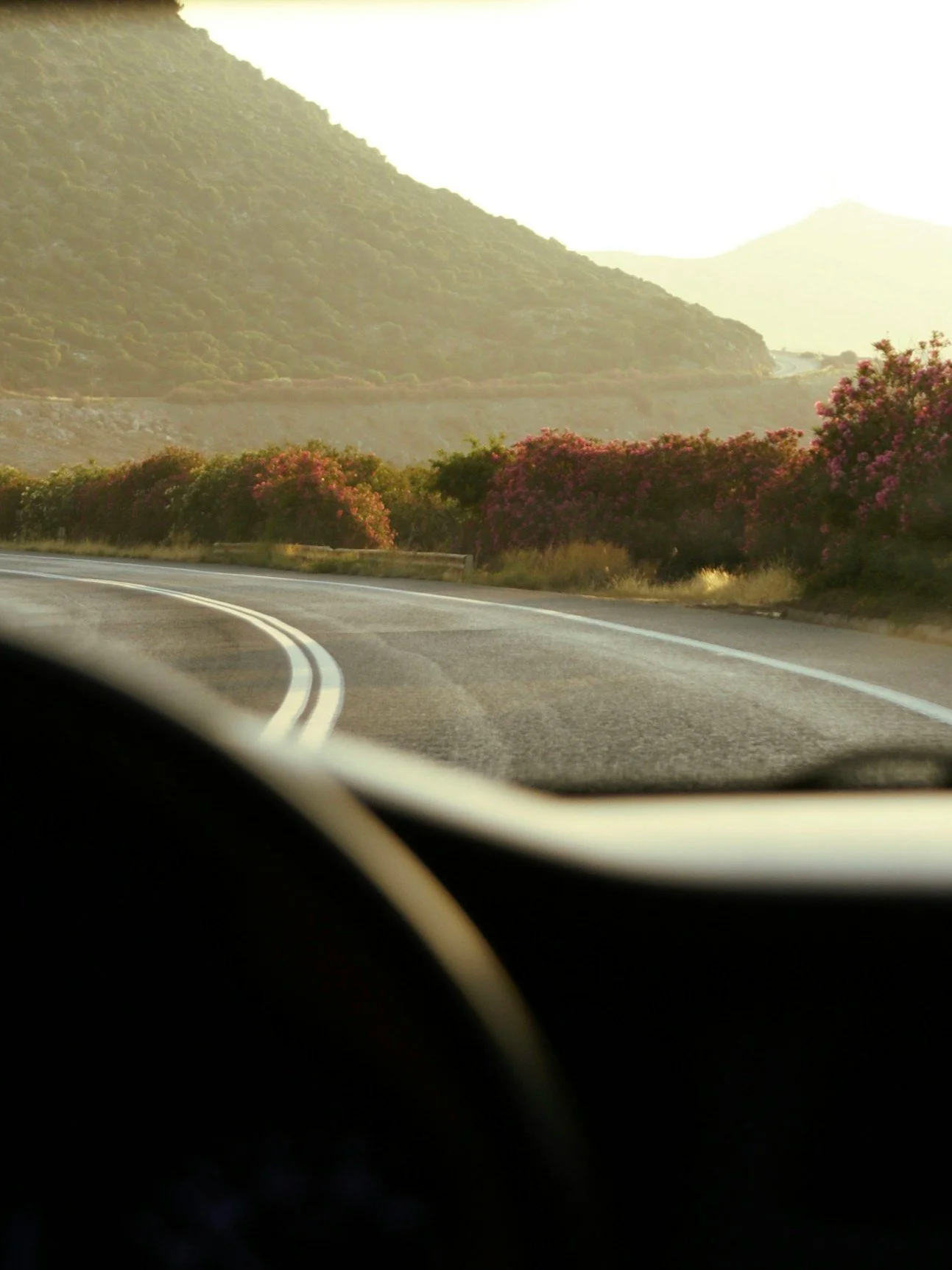
A car is not optional in South Crete. The beaches you came for, the gorges, the villages, the tavernas at the end of dirt roads — none of it is reachable without one. Which means that before you arrive at the place you have been looking forward to for months, you will almost certainly pass through the experience of picking up a rental car at a Greek airport. For some visitors, this is where the holiday first goes wrong.
It should not be complicated. It frequently is. Here is what actually happens, and what to watch for.
The credit card that isn't yours
You book a car online in someone else's name — or more commonly, your partner books it and you are the one collecting it, or vice versa. You arrive at the desk, hand over your driving licence, and are told that the credit card used to make the booking must be present and must belong to the primary driver named on the reservation. It does not. The booking is voided or renegotiated on the spot, at the desk's terms rather than the ones you agreed to online.
This catches an extraordinary number of people. The rule is buried in the terms and conditions of many rental platforms and almost never flagged clearly during the booking process. If you are booking for someone else to drive, or if your household uses a shared or partner's card for travel bookings, read the fine print before you arrive — or better still, book through a local company that will discuss these things with you in advance.
The insurance theatre
You booked through a comparison site. The site offered you their own "Full Protection" or "Premium Cover" at checkout and you added it, reasonably assuming you were now covered. You were not — or at least, not in the way you thought.
What most comparison sites sell is a private insurance contract between you and the platform. The local car rental company at the desk has no obligation to recognise it. Many don't. When you arrive, the agent will tell you that your cover is not accepted, and that without their own policy you are liable for an excess of anywhere between €800 and €1,500, secured against your credit card immediately. If you don't have a credit card with sufficient available funds, or you decline, the alternative is purchasing their insurance at the counter — at substantially higher rates than you would have paid had you booked direct.
The solution is simple and saves money: book directly with a reputable local company and purchase insurance through them at the time of booking. What you see is what you pay, and the coverage is real.
The unpaved road clause
South Crete is threaded with dirt tracks, gravel roads and mountain paths that lead to the most beautiful places on the island, especially secluded beaches. Google Maps, cheerfully unaware of rental agreements, will send you down them without hesitation.
Many rental companies include clauses in their contracts — sometimes presented as a form to sign at pickup, sometimes buried in the terms — prohibiting use of unpaved roads, as we also explain in our article about Driving in Crete. The definition of "unpaved" is flexible and the enforcement is retrospective: if you return a car with dust on the undercarriage, or with any damage that could plausibly be attributed to an off-road surface, the clause gives the company grounds to void your insurance entirely and charge you for the repair.
Modern rental cars — including those operated by local companies in Crete — are routinely fitted with GPS telematics systems that log real-time location, route history, vehicle speed and driving behaviour. This data is not typically monitored in real time, but it is recorded and can be reviewed if a dispute arises. If you return a car with undercarriage damage and deny having driven on unpaved roads, the route log can be pulled. The unpaved road clause, which might seem like fine print with no enforcement mechanism, has considerably more teeth than most visitors realise. Ask your rental company explicitly whether their vehicles are tracked and what data they retain — a transparent operator will tell you plainly.
A company that is honest about Crete's road conditions will either have a policy that accommodates them, or will tell you clearly what to avoid.
The cancelled reservation
Some companies treat a delayed arrival as a cancellation. The logic runs like this: you booked a pickup for 21:00, your flight lands late, and by the time you clear baggage and reach the desk it is 22:05. The company has closed — or claims to have closed — and your reservation is marked as a no-show. You are charged a cancellation fee, and the car you booked is no longer available. This has happened to travellers arriving at Heraklion airport after flights delayed by as little as a few minutes past a company's stated closing time, with charges levied for the full rental period rather than just the deposit.
The fix is straightforward: call or message the company the moment your flight is delayed, and keep a record of that communication. Reputable operators will hold your reservation if they know you are on your way. Always book with a company that has a clear, written late-arrival policy — and confirm it before you land.
The verbal promise that disappears
A subtler variation: the agent at pickup tells you verbally that returning the car a few hours late is fine, no charge. A different agent handles the drop-off, denies any such conversation took place, and charges your deposit accordingly. The first employee's word counts for nothing if it is not on the contract.
The rule is simple: if it is not in writing, it does not exist. Any agreement about return times, fuel policy, or additional driver permissions should be reflected in the rental agreement you sign, not offered as a verbal reassurance at the desk.Phantom damage
The car has a scratch you did not cause. You did not notice it when you picked up the vehicle — it was dark, or you were tired after the flight, or the agent waved you toward the car without walking you around it. At drop-off, the scratch is discovered, attributed to you, and charged against your deposit.
This is documented as one of the most common complaints in Crete and across Greek car rentals generally. The fix is methodical and takes three minutes: film the entire exterior of the car before you drive away, slowly, with the rental office visible in the background. Do the doors, the wheel arches, the bumpers. Ensure the video is timestamped. Send it to yourself so it exists independently of your phone. If you have zero-excess insurance, the point is moot — but most people don't.
The fuel trap
Some rental companies offer what they call a "Full-to-Empty" fuel policy: you pay for a full tank upfront at their per-litre rate, which is typically 20 to 30 percent above the pump price at local stations, and return the car empty. In practice, returning a car exactly empty requires a level of petrol management most people find impossible without the stress of potentially running out on a remote road before catching a flight. The unspent fuel stays with the company.
Always ask for a Full-to-Full policy: you receive the car full, return it full, and pay only for what you used. This is standard practice among reputable local operators and the only fuel arrangement worth accepting.
The upsell at the counter
GPS navigation, child seats, additional drivers, roof racks, roadside assistance packages — each of these is a legitimate need in some circumstances and a pressure sale in others. The counter is not the place to make these decisions calmly. Agents at airport desks operate under commission structures that reward upgrades, and the combination of a tired traveller, a queue behind them, and a flight-to-accommodation transfer pending is not a negotiating environment.
Decide in advance what you actually need. A second driver added at the counter can cost €8 to €15 per day — over ten days, that is a material addition to the cost of the car. A GPS unit rented from the company is nearly always more expensive than simply using your phone with an offline map downloaded before you land.
The out-of-hours fee
Late arrivals are common in Crete — Heraklion Airport in particular sees a high concentration of evening flights from northern Europe. Many companies charge supplementary fees for pickups after a certain hour, often between 22:00 and midnight, and these fees may not be included in the quoted price. They appear at the desk, after you have already committed to the booking.
Check the fine print for after-hours fees when you enter your flight time during the booking process. A transparent operator will include them in the final quote before you pay.
A simpler way
All of the above is avoidable. The consistent thread through every scenario is the same: the problems arise from booking through intermediaries, from insurance purchased in one place and recognised in another, from terms that are clear only to the company that wrote them.
Guests staying in one of the homes in our STAYS collection can avoid all of it. We work with a trusted local car rental partner who we have selected specifically for transparency and simplicity. The package includes a second driver at no extra cost, no deposit required, child seats, and full insurance with zero excess — no credit card block, no phantom damage risk, no unpaved road anxiety. The price you are quoted is the price you pay.
If you would like a quote for your stay, get in touch with us directly and we will arrange it. One less thing to think about before you arrive.
