
Crete vs Mykonos vs Santorini: Which Greek Island Is Right for You?
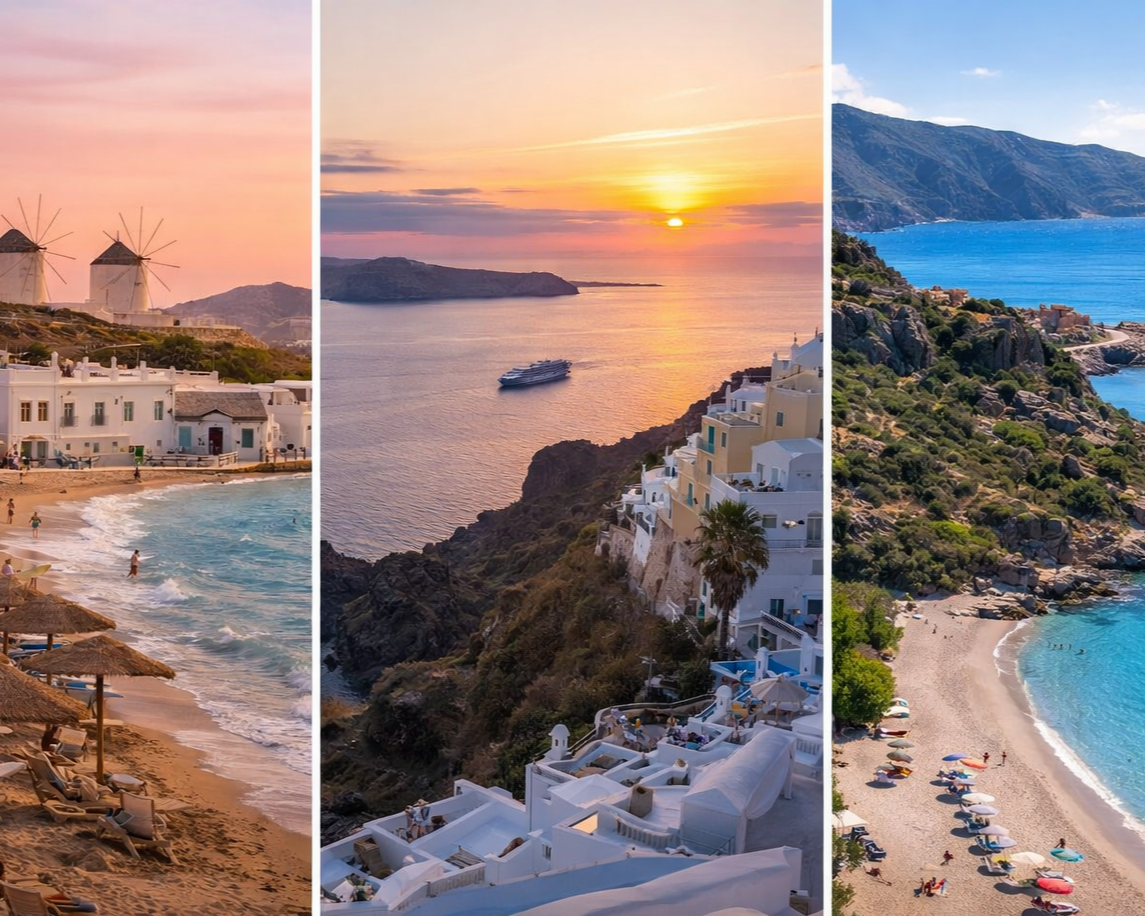
Every year, a very large number of people sit down in front of a search engine and type some version of the same question. Crete or Santorini. Mykonos or Crete. Which Greek island should I choose.
The internet responds with a great deal of content that is, broadly speaking, useless — listicles assembled by people who have visited none of the islands in question, comparison tables that reduce the complexity of three entirely different places to a set of star ratings, and travel writing so thoroughly hedged that it manages to recommend everything while saying nothing.
This is an attempt at something more honest.
We should declare our position immediately: we are based in South Crete, manage villas there, and think it is one of the finest places in the Mediterranean to spend a week. That bias is real and we are not going to pretend otherwise. What we can offer, in return for the transparency, is a genuinely useful account of what each island actually is — not what the tourism boards would like it to be — so that you can make a decision that suits you rather than one that suits the algorithm.
Three islands, three different propositions
The mistake most comparison articles make is treating Crete, Mykonos, and Santorini as competitors offering different versions of the same thing. They are not. They are different propositions entirely — different scales, different histories, different relationships to the sea and to tourism — and choosing between them is less like choosing between three restaurants on the same street than like choosing between three different kinds of holiday.
Understanding what each island actually is, rather than what it is marketed as, is the only useful place to start.
Mykonos: what it is and who it is for
Mykonos is the easiest of the three to describe, because it has become very precisely what it set out to become: the most glamorous, most expensive, most overtly social party destination in Greece, and one of the most recognised in Europe.
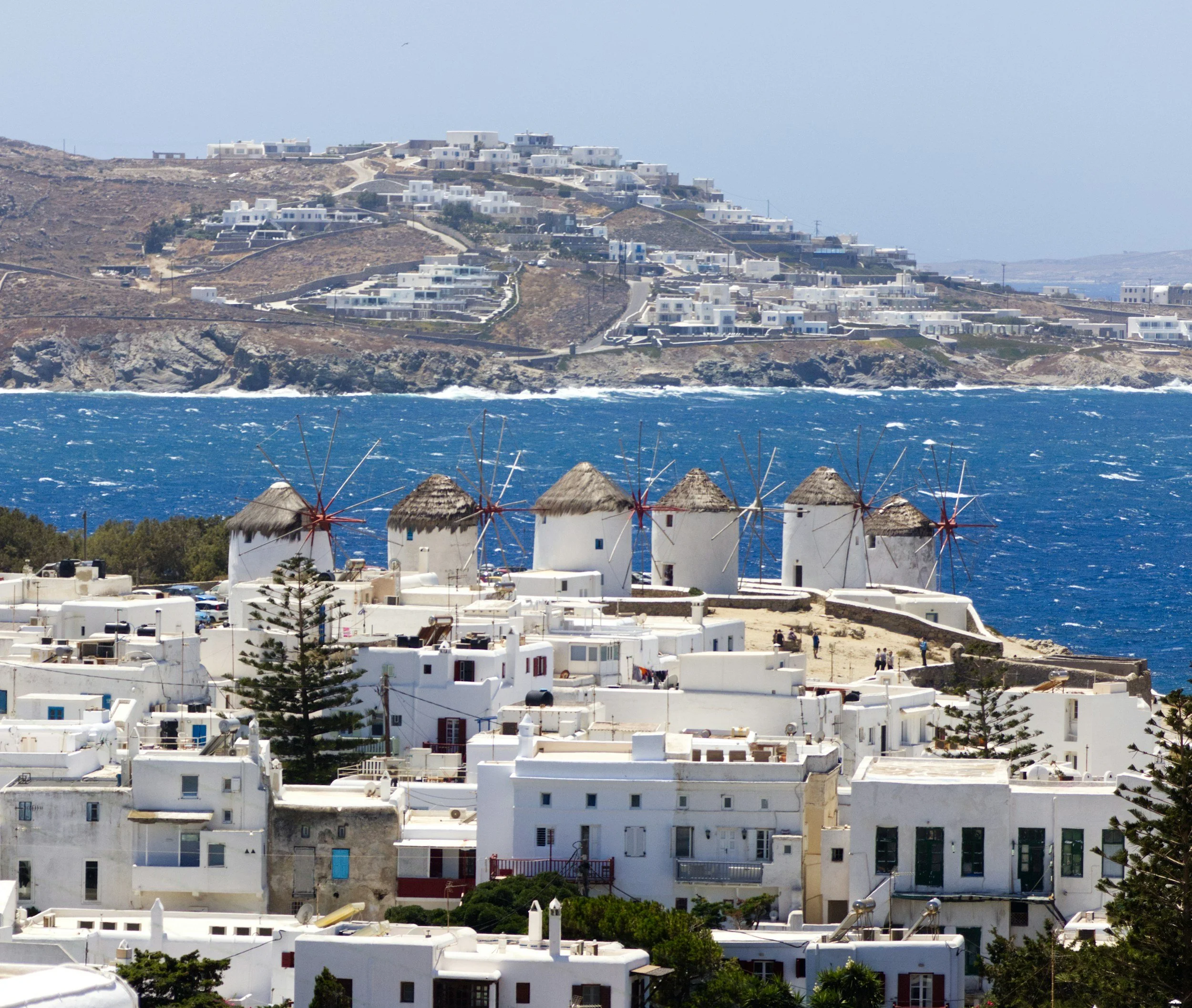
The windmills are still there. The whitewashed Cycladic architecture is still there. Little Venice is still genuinely charming. But the dominant experience of Mykonos in high season is beach clubs with international DJs, boutiques selling things at prices that would be considered ambitious in Milan, restaurants where a meal for two costs more than a night in a good hotel elsewhere on the Aegean, and a social atmosphere in which being seen is at least as important as seeing anything.
This is not a criticism. It is a description. Mykonos has built an extremely successful product and delivers it with considerable professionalism. If you are in your twenties or early thirties, travelling with friends, want to dance on a beach until the afternoon and then dress up for dinner, and are comfortable with the prices that environment commands — Mykonos in July is probably the best version of that experience available anywhere in the Mediterranean.
If that is not what you want, Mykonos will frustrate you in direct proportion to the distance between your expectations and its reality. Privacy is scarce and expensive. Quiet is not really the point. The beaches are organised and beautiful and completely given over to the beach club experience. The island's authentic fishing village character, while still faintly traceable in the back streets of Mykonos Town, has been substantially overlaid by fifty years of increasingly intense international tourism.
The price of a week in a comparable villa or hotel on Mykonos versus Crete is not a subtle difference. It is, in peak season, roughly double or more. What that premium buys is the Mykonos name, the social scene, and the infrastructure that supports them. Whether that represents value depends entirely on what you came for.
Santorini: the most photogenic place in Greece, and what that costs
Santorini is one of the most dramatically beautiful places on earth. This is not hyperbole. The caldera — the remnant of a volcanic explosion so large it may have contributed to the collapse of the Minoan civilisation on Crete — creates a landscape of vertiginous cliffs, deep blue water, and whitewashed villages that genuinely looks the way the photographs suggest. The sunset from Oia is as extraordinary as its reputation implies.
The question is not whether Santorini is beautiful. The question is what it is like to be there.
The island receives somewhere between three and four million visitors per year on a landmass of roughly 76 square kilometres — about twice the area of the London borough of Kensington and Chelsea. In July and August, cruise ships disgorge thousands of day visitors into Oia and Fira in the early afternoon, exactly when the light is best and the streets are already full of hotel guests. The queues for the famous sunset viewpoints are managed by crowd control. The famous cave hotels — beautiful in photographs, and genuinely impressive in person — are frequently booked a year in advance and priced accordingly.
None of this makes Santorini a bad choice. It makes it a specific choice. If what you want is a short, intensely romantic trip — a honeymoon, a significant anniversary, two or three nights of extraordinary scenery and excellent wine — Santorini delivers that with great efficiency. The cave hotels are wonderful. The local Assyrtiko wine is among the finest white wine produced anywhere in the Aegean. The view from a private terrace at sunrise, before the cruise ships arrive, is one of those travel experiences that justifies the expense and the planning.
What Santorini is not is a place for a long holiday, a family trip, a week of serious swimming, or any particular desire for solitude. The beaches — volcanic black or red sand, dramatic in appearance — are not the kind you spend long days on. The island is small enough that you run out of it quickly. And the prices, at the higher end of what Greece charges anywhere, reflect the extraordinary concentration of demand into a very small space.
Santorini is not overrated. It is simply very specifically rated, and the rating applies to a specific kind of trip.
Crete: what it actually is
Crete is the largest island in Greece and the fifth largest in the Mediterranean. It is 260 kilometres from west to east — long enough that the western and eastern ends of the island have substantially different characters, climates, and tourist densities. It has four mountain ranges, two of them exceeding 2,400 metres.
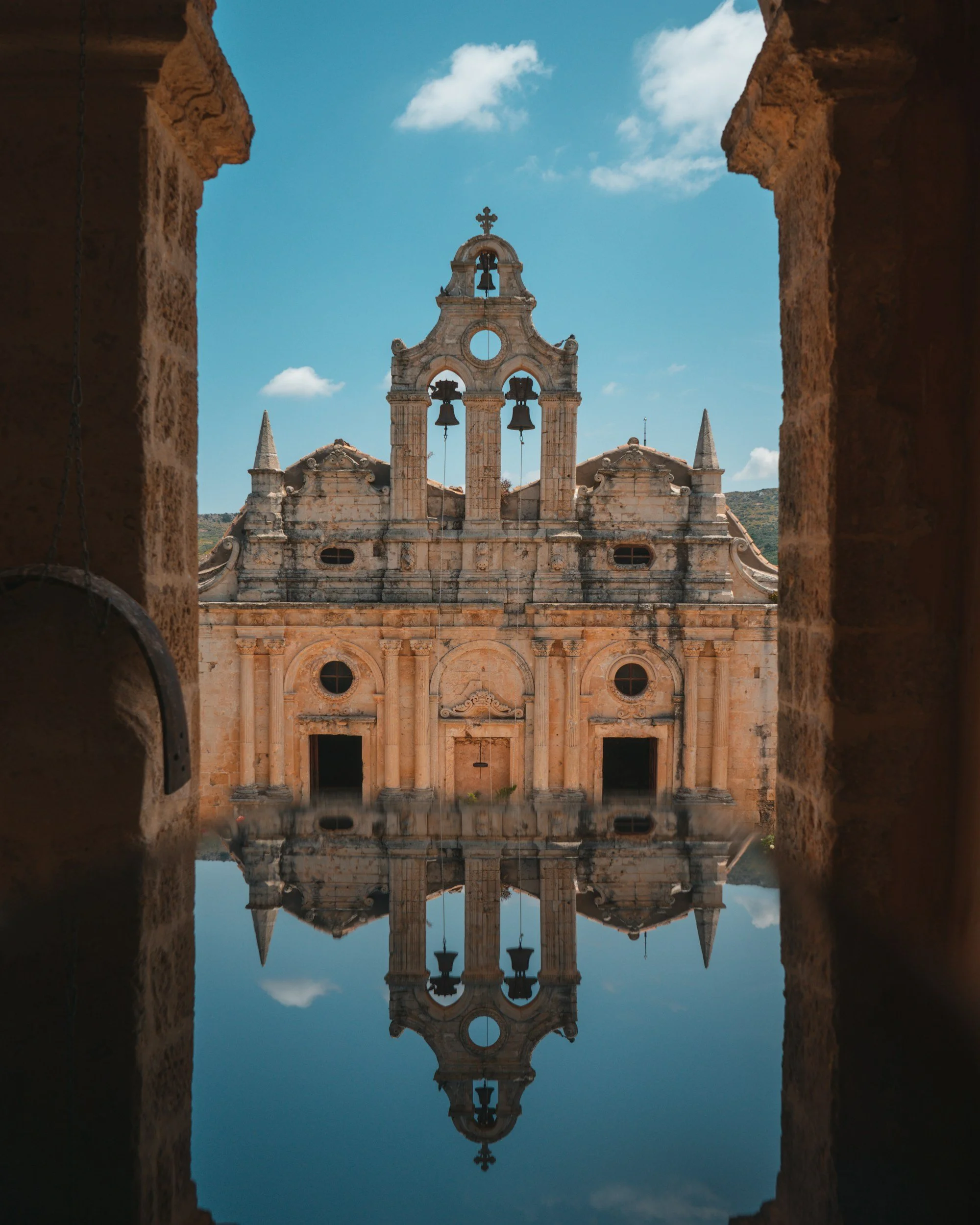
It has more than a thousand kilometres of coastline. It has Minoan palaces four thousand years old, Venetian harbours, Byzantine monasteries, and a food culture rooted in the most biodiverse agricultural landscape in Greece.
It also has, depending on where you go, very large numbers of tourists in July and August.
The distinction that matters most for anyone planning a holiday is the difference between north and south. The north coast — Heraklion, Chania, Malia, Rethymno, Elounda — is where the majority of Crete's hotel infrastructure is concentrated, where the airport transfers run, and where the island's reputation for mass tourism is most deserved. In high season, the popular beaches of the north coast are busy in the way that all popular Mediterranean beaches are busy: organised sun lounger rows, beach bars, water sports, the particular sound of several thousand people enjoying themselves simultaneously.
The south coast — the Libyan Sea coast, from Sfakia in the west through Plakias, Agios Pavlos, Triopetra, Agia Galini, and Matala toward the Messara plain — is a different proposition. This is the coast that faces Africa rather than Athens, where the mountains come close to the sea and the roads narrow and the villages are small enough that the baker knows the fisherman. In July and August it has visitors, but the scale of what the south coast offers — the length of the coastline, the number of beaches accessible only by boat or on foot, the depth of the landscape behind — means that it absorbs those visitors without losing its character.
The south coast is where we work, and our bias toward it should be understood accordingly. But the reason we work here rather than elsewhere on the island is precisely because it retains something that is increasingly rare in the Mediterranean: the quality of a place that has not been entirely reorganised around the needs of tourism. The tavernas exist because local people eat in them. The beaches are accessible because the terrain made them that way, not because someone built a car park. The villages look the way they do because they were built for the people who live in them.
The practical comparison
For those who find the above insufficiently direct, here is the comparison in plainer terms.
Beaches: Crete wins on variety, length, and the availability of genuinely uncrowded options even during peak season. Santorini's beaches are dramatic but limited. Mykonos has well-organised, beautiful, crowded beaches that are largely subsumed into the beach club experience.
Food: Crete wins without much competition. The island's agricultural tradition — olive oil, wine, cheese, vegetables, honey, lamb — produces a food culture of genuine depth and diversity. The Cretan diet has been studied seriously by nutritional researchers for decades, and the everyday cooking of a good village taverna reflects ingredients and techniques that go back centuries. Santorini has excellent wine and some very good restaurants. Mykonos has good restaurants at significant prices.
History and culture: Crete is in a different category from the other two. Minoan civilisation, which flourished here for two thousand years before the Classical Greeks built the Parthenon, was Europe's first advanced culture. The palaces at Knossos, Phaistos, and Agia Triada; the collection in the Archaeological Museum of Heraklion; the Byzantine monasteries; the Venetian harbours of Chania and Rethymno; the Gortyn Code — the oldest surviving legal inscription in Europe — all of this exists on one island. Santorini has the Bronze Age site of Akrotiri, preserved under volcanic ash, which is genuinely significant. Mykonos has a well-preserved Cycladic town and some windmills.
Privacy: South Crete, specifically in privately managed villas, offers a level of privacy that neither Mykonos nor Santorini can match at any price. A private villa on a cliff above the Libyan Sea, with your own pool and your own terrace and the sea visible from every room, is simply not a product that Mykonos or Santorini can replicate at equivalent cost — or often at any cost.
Value: Crete offers the best value of the three by a considerable margin, particularly for families and groups. The price differential between a week in a south Cretan villa and an equivalent week on Mykonos or Santorini is significant. What Crete offers for that difference in price is more space, more variety, more beach, more culture, and more of what Greece actually is outside its most internationally marketed versions.
Crowds: Santorini and Mykonos are densely visited relative to their size, and high season on both islands reflects that. Crete's size means that even at peak visitor numbers, it is possible to have a beach largely to yourself if you know where to go and are willing to drive a little or walk a little or take a boat.
Who should go where
The honest answer, stripped of diplomatic hedging:
Choose Santorini if you want two or three nights of extraordinary scenery, romance, and very good wine, and you are comfortable with premium prices and significant crowds at the most famous viewpoints. It is not a week-long destination for most travellers, but as a short, intense experience it is genuinely exceptional.
Choose Mykonos if the social scene, the beach clubs, and the glamour of a place that takes nightlife and style very seriously are what you came for. It is the best version of that experience in Greece. It is not the right place for a family holiday, a culturally immersive trip, or anyone operating on a budget that would be considered normal anywhere else.
Choose Crete — specifically the south coast — if you want a week that combines serious beaches with serious culture, genuine local life with genuine privacy, the freedom to explore a landscape that has been shaped by four thousand years of human civilisation with the freedom to do absolutely nothing for an afternoon beside a pool. If you want to eat well without paying Mykonos prices, to find beaches that feel like discoveries rather than products, and to stay in a place that feels like somewhere rather than somewhere-for-tourists — the south coast is where to be.
A note on timing
All three islands are substantially different experiences outside July and August. Santorini in April or October is quieter, more affordable, and in many ways more itself. Mykonos in May, before the season fully begins, retains more of the Cycladic village character that the summer overwhelms. Crete in May and June — or September and October — is, in our entirely unbiased opinion, one of the finest places to be in the Mediterranean: warm enough to swim, cool enough to walk, quiet enough to hear yourself think, and vivid enough in colour and light that the photographs you take look like the work of a professional photographer rather than someone trying very hard with a phone.
The south coast of Crete in early June, with the wildflowers still on the hillsides and the sea already warm enough and the beaches still uncrowded, is not a secret that needs much protection. It simply requires the willingness to look slightly beyond the obvious.
Our Home Collection includes villas across the south coast — from Keras Cliff House above the Libyan Sea near Agia Galini to properties above Plakias, Agios Pavlos, and Triopetra. If you are still deciding between the different areas of the south coast, our guide to where to stay in South Crete covers the character of each area honestly. And if you have already decided on Crete and are trying to understand how to make the most of a week here, our practical guide to how many days you need is the place to start.
The right island is the one that matches what you actually want from a week away. We have tried to describe all three honestly enough that the choice is yours to make clearly. We will admit, however, that we are not entirely neutral on the question of which one we would choose.
