
The South Crete Wildfire: What Happened, What It Means for Your Visit
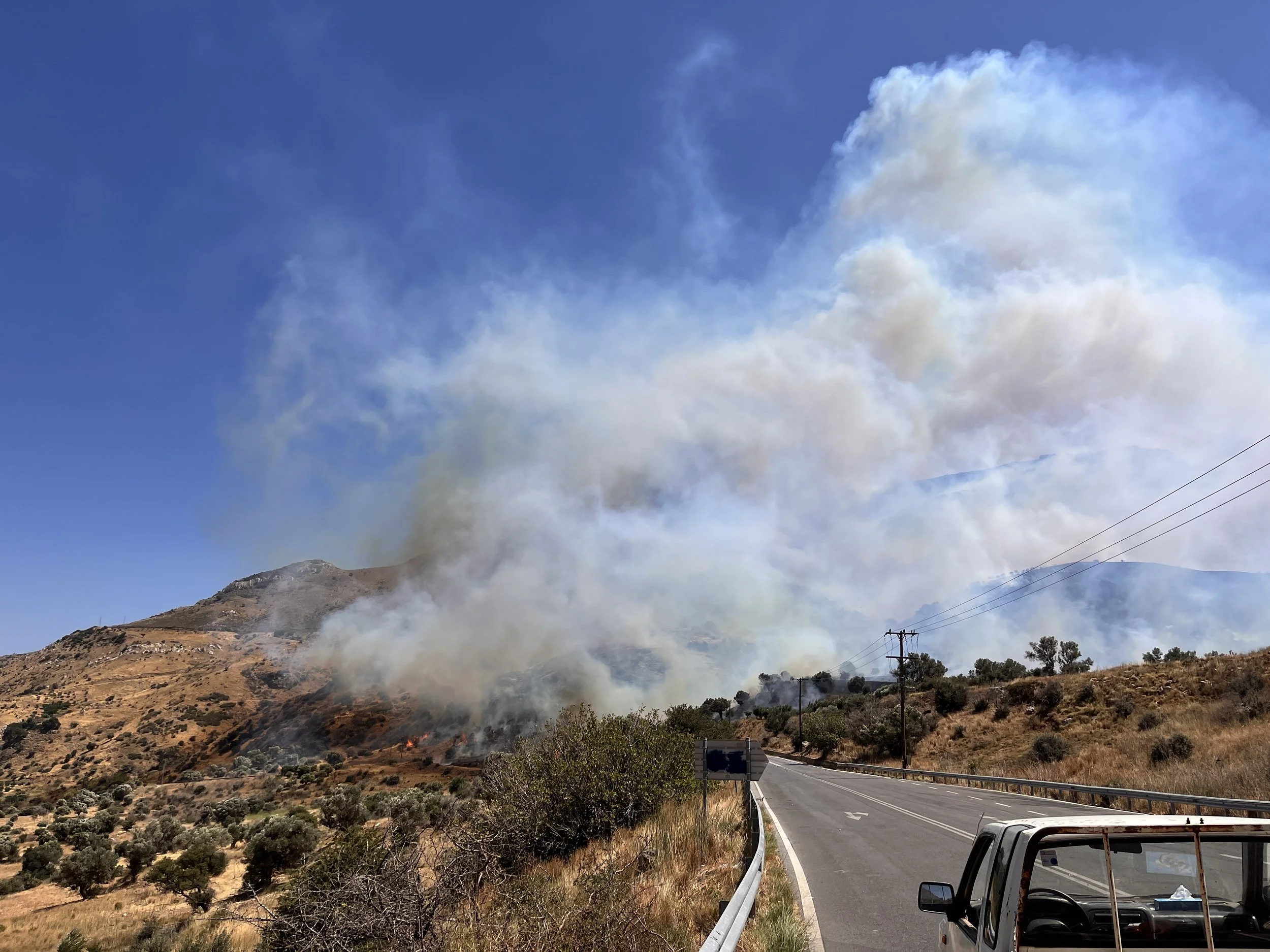
In the afternoon of 29 July 2026, a wildfire ignited near the village of Krya Vrysi in the Agios Vasileios municipality of southern Rethymno and spread rapidly south toward the coast. Driven by extreme northerly winds, the fire moved across a front that eventually stretched more than 15 kilometres, reaching the southern coastline and affecting some of South Crete's most beloved landscapes. A second front reached the area around Preveli shortly after.
The scale of the emergency was significant. Around 8,000 residents and visitors were evacuated from the affected areas over the course of two days. Agia Galini was evacuated by land with the assistance of the police; people trapped at Agios Pavlos and Triopetra, unreachable by road due to the fire, were evacuated by sea — by Coast Guard vessels and private boats that responded to the emergency. Two firefighters lost their lives battling the blaze on Crete. A third died on the mainland. Nearly 4,500 hectares of land were burned across the southern Rethymno region.
The cause, according to preliminary findings, was not arson and not carelessness. Investigators determined that extreme winds caused medium-voltage power lines to sway and produce sparks that ignited the dry summer vegetation near Krya Vrysi. A DEDDIE electrical grid official has been charged with arson by negligence. The fire was, at its origin, an infrastructure failure meeting the conditions that southern Crete faces every August — extreme heat, extreme dryness, and winds that can move a fire faster than a vehicle can travel on a mountain road.
What was affected
The areas most significantly impacted by the fire were the hills behind Agia Galini, Agios Georgios, Agios Pavlos, Triopetra, Agia Paraskevi, Lefkogia and the area around Preveli. The landscape in these zones has been substantially changed. Hillsides that were green a week ago are now black. That is the reality, and visitors to these areas in the coming weeks and months will see it. The beach bars at Agios Pavlos were burned to the ground.
At Preveli, early assessments brought some relief: the heart of the famous palm forest appears to have been spared, with the worst damage concentrated around its edges rather than its centre. The gorge and the lagoon — the landmarks that make Preveli one of the most distinctive places in Crete — remain.
Agia Galini itself was not burned. Firefighting crews halted the advancing flames less than a kilometre from the village's hotel properties, and the town has officially reopened. The Klima and Timbaki areas to the east were unaffected.
The status of STAYS properties
We want to be direct with our guests about what this means for the Home Collection.
The following properties are unaffected and operating normally: Keras Cliff House, Villa Francesca, and Villa Ninemia. Villa Ilisio and Klima Breeze, north of Timbaki, are also fully unaffected. Guests staying at these properties will find everything open and operating as normal. Nothing about their visit changes.
The following properties — Eulimene, SeaCrete, Villa Faros, House Marevouni, Sto Lofo and Aitherion — are temporarily closed for August. The fire did not damage the houses themselves, with the exception of Eulimene's outside terrace, but the electricity infrastructure in these areas requires restoration by the municipality before we can safely reopen. We are in close contact with local authorities and our teams on the ground. From September, we expect full normal operations to resume across all properties.
If you have a booking at one of the affected properties and have questions about your stay, please reach out to us directly. We are here.
A note on the landscape
We will not pretend that the burned hillsides are not there. Parts of the landscape around Agios Pavlos, Triopetra and the area west of Agia Galini look very different today than they did a week ago. If you are visiting these areas in September or October, you will see evidence of the fire — charred scrubland, blackened slopes — alongside the sea and the beaches, which are unchanged.
This is part of what it means to know a place honestly rather than through a brochure. Crete's landscape is ancient and resilient. Wildfires have always been part of the Mediterranean summer — the conditions that make this island extraordinary in August, the heat and the dryness and the wind, are the same conditions that make fire possible. The vegetation that covers these hillsides is adapted to it in ways that are not always visible. Recovery begins before the ash has cooled.
We have written before about wildfires and the Mediterranean landscape — what causes them, why they recur, and what recovery looks like — and that context is worth reading if you want to understand what the region faces each summer and how it responds.
South Crete is open
The airports at Heraklion and Chania are operating normally. The northern coast — Rethymno Old Town, Chania, Heraklion — was unaffected. The majority of South Crete's beaches, villages and attractions are open and welcoming visitors. The sea is unchanged. The gorges to the west are open. The Phaistos archaeological site and the Heraklion Museum are operating normally.
The communities of Agios Vasileios have been through a serious event. They are also, as anyone who knows this part of Crete will recognise, not the kind of communities that remain defeated for long. The tavernas in Agia Galini that stayed open through the evacuation are serving again. The fishing boats are out. The season continues.
If you are travelling to South Crete this summer or autumn, come. There are parts of the landscape that need time to recover. There are also places of extraordinary beauty that are entirely intact, and people who will be glad you are here.
