
Triopetra Beach: Two Beaches, Three Rocks, One of the South Coast's Best Days
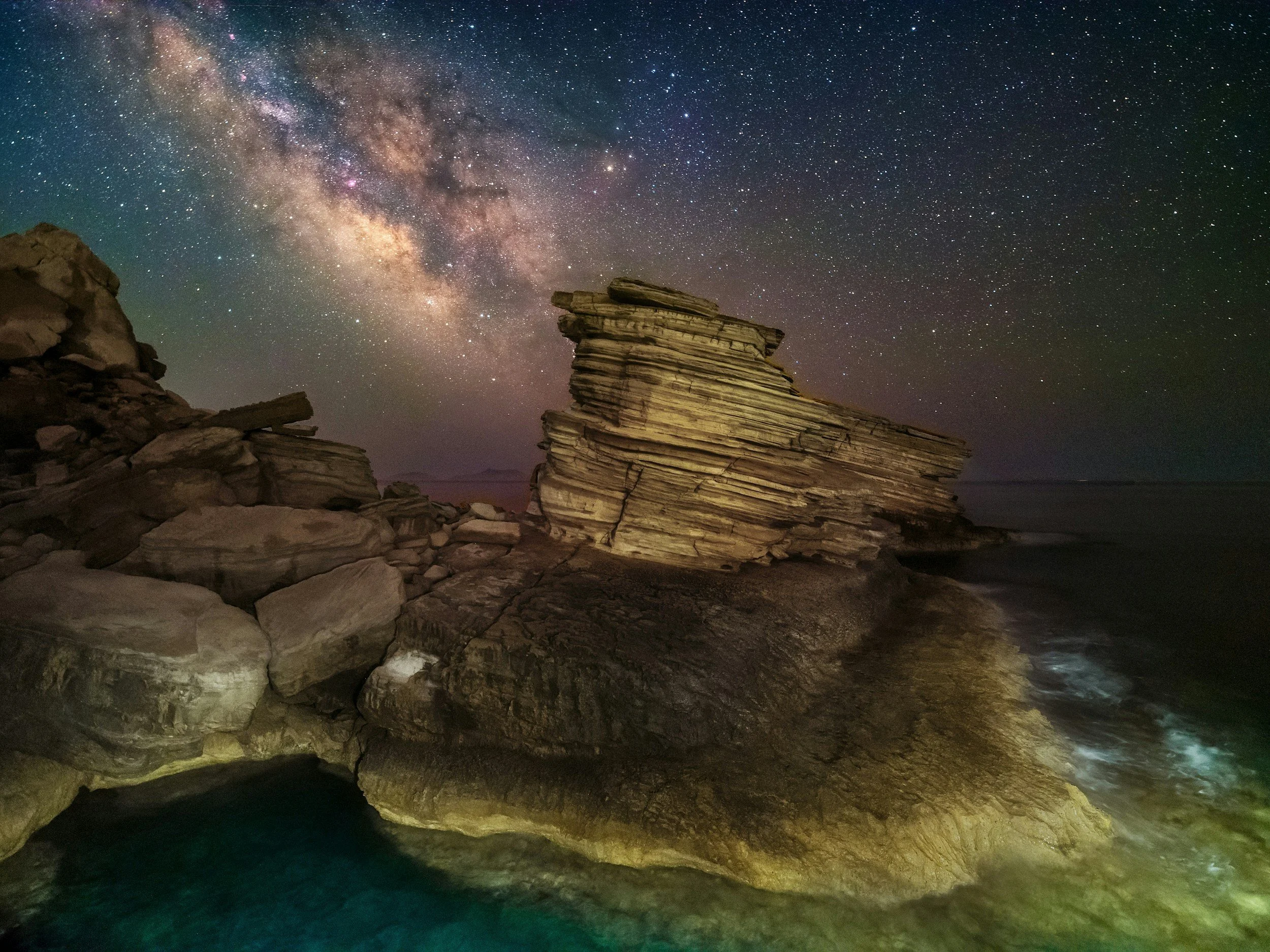
The road down from Akoumia is the first indication that you are going somewhere that has not yet been smoothed out for easy consumption. It winds through the mountain village, narrows briefly between the stone walls of old farmhouses, then opens onto a descent through olive groves that ends — suddenly, and with more force than you expect — in a view of the Libyan Sea that stops conversation mid-sentence.
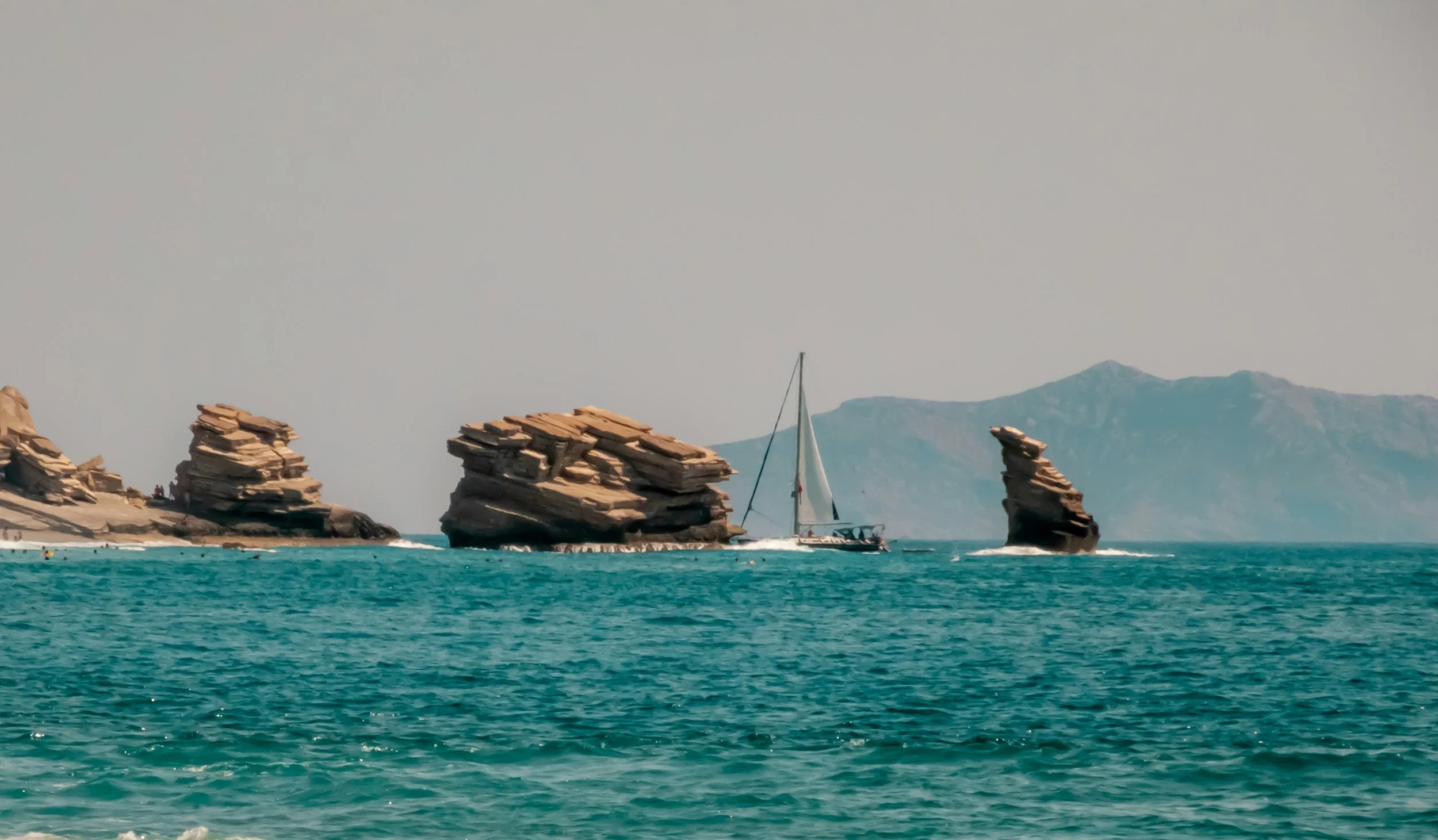
Below, the coastline curves in a long arc. Three enormous rocks rise from the water at the tip of a small peninsula, catching the light in a way that changes with the hour. On either side of that peninsula: two entirely different beaches. This is Triopetra — the name simply means Three Rocks in Greek — and understanding the distinction between its two halves is the first thing any visitor should know.
The setting
Triopetra sits at the foot of Mount Siderotas, in the part of South Crete where the mountains come close to the sea and the olive groves run almost to the waterline. The wider coastal strip here is known as Akoumiani Gialia — Akoumia Beach — because the land belongs, for the most part, to families from the village above who built cottages here centuries ago to shelter during the olive harvest. That agricultural history is still legible in the landscape: the groves behind the beach, the small stone walls, the sense of a place that has been cared for by the same families across many generations.
Looking south from the beach, the Paximadia Islands sit on the horizon — the same twin islands visible from the cliffs above Agia Galini, from the terraces at Agios Pavlos, from almost every elevated point on this stretch of coast. The sea between here and those islands is the Libyan Sea at its most open: deep blue in the middle of the day, copper and gold in the evening, entirely still on the calm mornings that make the south coast what it is.
The three rocks
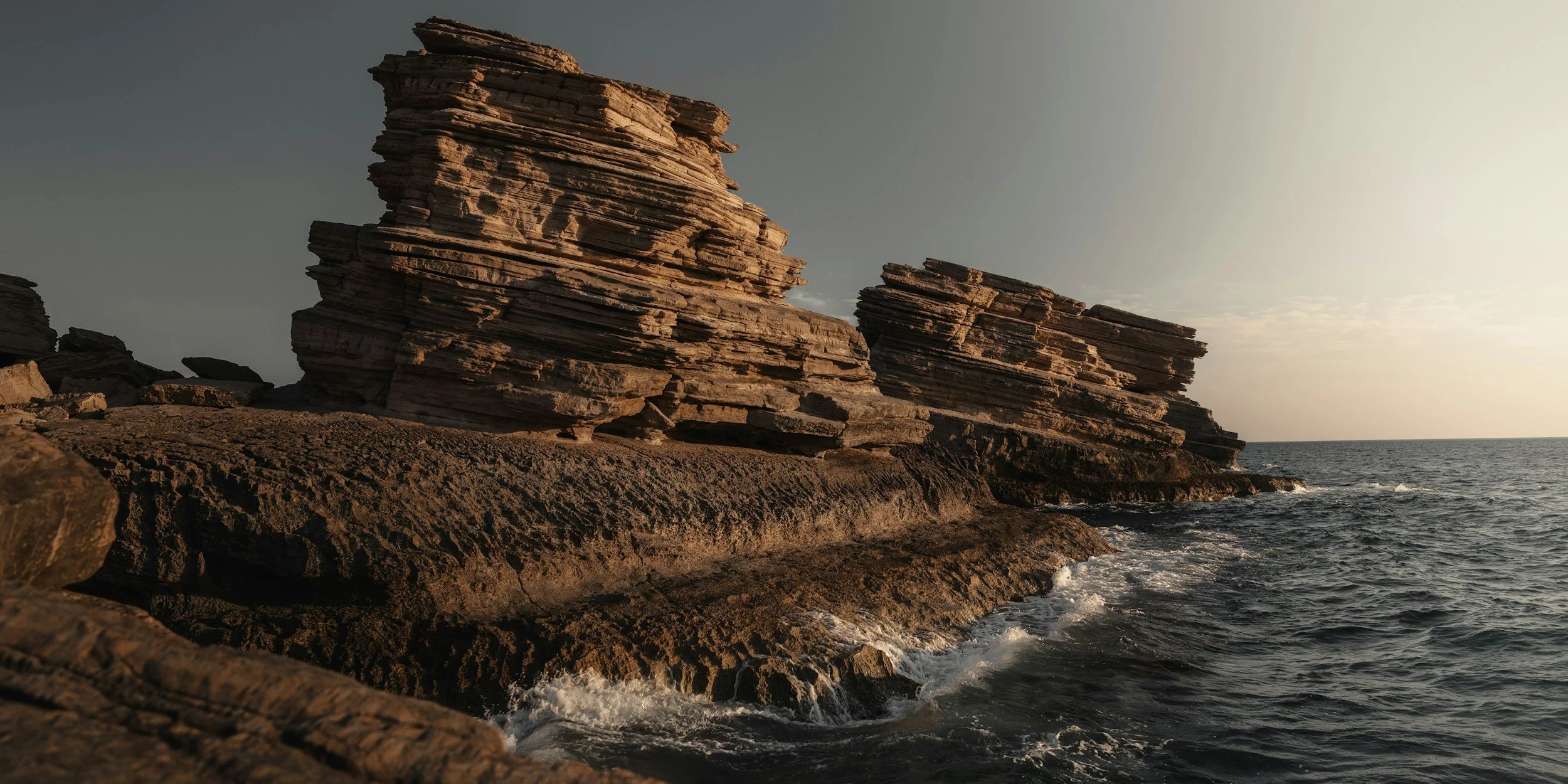
Walk to the peninsula that divides the two beaches and you understand why these rocks have given the place its name and its character. They are genuinely large — dramatic in the way that natural formations rarely are when described — and their appearance changes throughout the day. In the morning, the water around them is at its most vivid, blues shifting from shallow turquoise to deep navy as the bottom drops away. By afternoon the colour deepens. At sunset, with the light coming from the west, the stone itself warms to amber.
A large triangular cave, carved into the base of the rocks at the waterline, provides shade and makes for a good destination if you want to walk rather than simply settle. Snorkellers find the underwater terrain around the rocks rewarding — crevices, overhangs, the kind of variety that a flat sandy seabed doesn't offer.
The large beach: Triopetra
West of the three rocks stretches the main beach — sometimes called Chatzi, or simply West Triopetra. It runs for the best part of a kilometre toward Ligres, a long open sweep of coarse sand and fine gravel backed by dunes and the olive groves of the Akoumia families. It is one of those beaches that absorbs people without appearing to notice them. Even in August, the scale of it means you can walk ten minutes in either direction and find yourself essentially alone.
The water is clear and the seabed drops gradually, making it comfortable for families, though the beach's open westward orientation means it catches the afternoon wind more directly than the small beach next door. On a meltemi day — when the wind comes down from the north and turns the open sea choppy — the large beach feels it first. This is when Little Triopetra earns its keep.
The single taverna on the large beach is Pelagos Panorama, sitting above the waterline with the view its name promises: the full sweep of the bay, the rocks, the Paximadia Islands on the horizon. It serves Greek and Mediterranean food through dinner. The terrace faces south, which means the evening light arrives at the table while you're still eating, and the sunset from here — unobstructed, over open water — is one of the better ones on this stretch of coast.
The small beach: Little Triopetra
East of the rocks, sheltered in a closed bay between the peninsula and the mouth of the Akoumianos river, is Little Triopetra — known locally as Koumado. Everything about it is different from its neighbour: smaller, more enclosed, calmer, and more animated by the presence of people.
The natural shelter of the bay means that when the large beach is being raked by the western wind, Little Triopetra can be glassy. The water is shallow at the edges, the atmosphere more contained. There are sunbeds, umbrellas, a small harbour where local boats are moored, and a cluster of places to eat that makes the small beach the better choice for those who want the day organised rather than open.
Apanemia is the taverna that gets mentioned first — a family-run place on the seafront with a reputation for genuine Cretan cooking and the kind of welcome that comes from people who have been doing this for long enough to mean it. Vasilis, nearby, is well-regarded for seafood and views over the bay. Apothiki and Filenia round out the options.
The Akoumianos river flows year-round into the sea at the southern end of the small beach, creating a natural boundary between Triopetra and the Agios Pavlos sand dunes further east. At certain times of year the river mouth forms a shallow freshwater lagoon where children wade while their parents swim beyond. It is one of those accidental arrangements that no designer would think to plan.
When to go
May, June, September and October are the months when Triopetra is at its most straightforwardly enjoyable — warm enough to swim without hesitation, quiet enough to have the beaches as they are meant to be experienced. The water temperature in the shoulder months is consistently good; the Libyan Sea holds its heat into late October.
July and August bring more people, but the large beach handles the peak season better than most. The wind is the variable to understand: when the meltemi blows, the large beach takes it full on and the small beach becomes the right choice. On calm days, the large beach is the place for a long morning with room to think.
Getting there
Triopetra is a car-only destination — there is no reliable public transport to the beach itself, though buses connect Rethymno to the village of Akoumia from which the final descent is a short drive.
From Agia Galini, allow around 35 to 40 minutes along the coastal road. From Plakias, the drive takes roughly 45 minutes — a route that is among the most beautiful short drives on the south coast and that passes several other beaches worth noting for future days. From Rethymno, allow around an hour.
Arriving from Spili or Rethymno, the approach from Akoumia is the more direct route. The road is paved throughout and perfectly manageable in a standard hire car, though it narrows through the village itself before widening again on the descent to the coast. Parking is a flat unpaved area near the tavernas at both beaches — straightforward in the shoulder season, and adequate in summer if you arrive before midday.
What's nearby
Agios Pavlos is roughly fifteen minutes east along the coastal road — a beach of a completely different character, with its famous sand dunes and the Cape Melissa headland, and a destination that deserves its own day rather than an afternoon detour.
Ligres Beach, a quieter and less visited stretch, is five kilometres west along the same coastal strip — the kind of beach that remains largely unknown outside the people who discovered it by accident and kept quiet about it.
Preveli and the Kourtaliotiko gorge are around forty minutes northeast — our guide to the gorge and Preveli Beach covers both in detail. For an evening out, the village of Spili — twenty minutes north through the mountains — is the best option in the wider area: its lion-head fountain, its central square, and its tavernas make it worth the drive regardless of where you're based.
Where to stay
House Marevouni, a traditional Cretan stone house in the quiet hillside village of Agia Paraskevi just above Triopetra, is the closest property in the STAYS collection to these beaches — a ten-minute walk or a two-minute drive from the waterline, with sea views, a shaded terrace, a barbecue, and the particular quality of a house that has been built into this landscape rather than placed upon it. For families or small groups who want to base themselves in this specific corner of the south coast, it is the most natural choice.
For those drawn to the Agios Pavlos end of this coastal stretch — where the dunes begin and the character of the coast shifts — Eulimene, SeaCrete, and Villa Faros are all in the STAYS Home Collection, each with their own position above Aniforas Bay and easy access to both Agios Pavlos and Triopetra. From any of them, both beaches are within fifteen to twenty minutes.
For a broader comparison of bases along the south coast, our guide to where to stay in South Crete covers the differences between the main areas honestly.
Triopetra is not a beach that asks much of you. The road brings you down through the olives, the sea fills the view, and the question of which side of the rocks suits the day turns out to be most of what there is to decide. Most people answer it correctly the second time they come, having learned it by experience the first.
