
Should You Feel Guilty About Your Villa Pool? The Science of Water in Crete
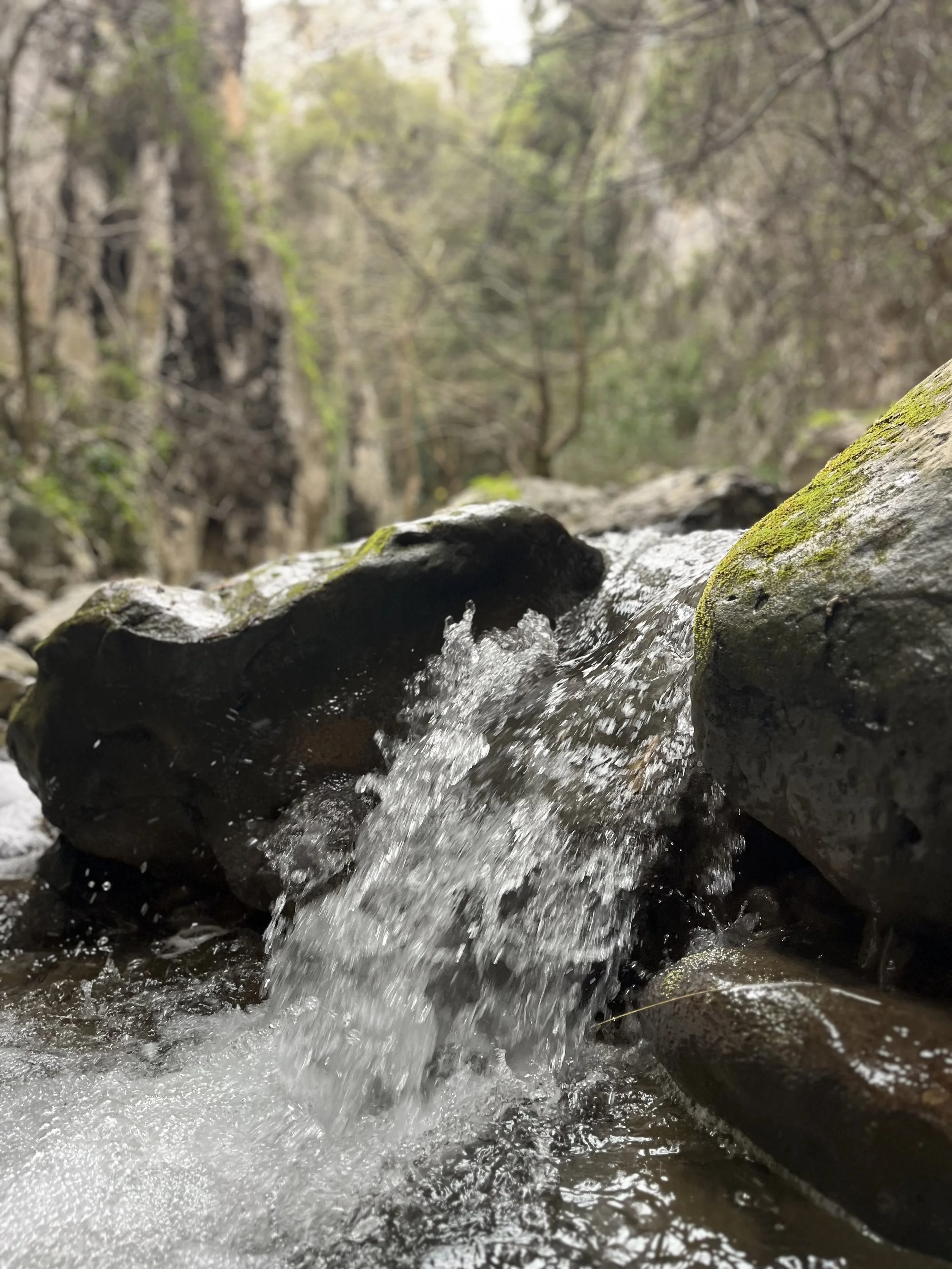
Somewhere between the first sip of cold water at a taverna table and the moment you slide into a villa pool at the end of a long August afternoon, a thought occasionally surfaces in the mind of the conscientious traveller. Is this sustainable? Should I feel guilty about this? Is Crete running out of water?
These are fair questions, and they deserve better than the vague reassurances or the breathless alarm that tend to dominate the conversation online. What they deserve is the science. And the science, it turns out, is considerably more nuanced — and in important respects more reassuring — than either the tourism industry's silence or the environmental advocacy sector's headlines would suggest.
An island that has always managed water
The story of water on Crete does not begin with climate change. It begins with the Minoans.
Europe's first advanced civilisation, which flourished on this island for roughly two thousand years before its mysterious collapse around 1450 BCE, built its great palace complexes — Knossos, Phaistos, Agia Triada — in areas with low water availability. This was, as a 2020 review of Crete's water resources published in the journal Water by Tzanakakis et al. notes, probably a deliberate choice: dry climates were understood to be healthier, less susceptible to waterborne disease. Rather than locating cities near rivers, the Minoans engineered their way to water security — building aqueducts, cisterns, drainage channels, and sewerage systems of a sophistication that would not be equalled in European architecture for millennia.
An Italian scholar visiting Knossos in the early twentieth century watched the ancient drainage system functioning perfectly during a heavy rainstorm and recorded his astonishment: he doubted, he wrote, whether there was another stormwater drainage system in the world still working four thousand years after its construction. An American engineer, noting the same phenomenon some decades later, questioned whether modern sewerage systems would still be operating after even a thousand years.
The point is not merely historical. It establishes something important about the relationship between this island and its water: scarcity has always been present, and human ingenuity has always responded to it. The Minoans built cisterns. The Venetians built aqueducts. The twentieth century brought deep wells and pumps. The twenty-first is bringing desalination plants, reservoir expansion, and — belatedly — serious infrastructure investment. Water management on Crete is not a new problem encountering new solutions. It is an ancient problem with a long track record of being solved.
What the numbers actually show
The headline finding of the Tzanakakis et al. review is one that rarely appears in the articles about Crete's water crisis: under average meteorological conditions, Crete is water-sufficient.
The island receives an average of 967mm of annual precipitation — generating a theoretical water potential of approximately 3,426 cubic hectometres per year. Total water use across all sectors amounts to around 611 cubic hectometres. In other words, Crete uses less than 18 percent of its theoretical annual water potential. The numbers, taken at face value, do not describe a fundamentally water-scarce island.
What they describe instead is a distribution problem — and a management problem. Rainfall is not evenly spread. The western part of the island receives nearly twice the annual precipitation of the east: 1,179mm in western Crete against 675mm in the east, with the Ierapetra valley in the southeast receiving as little as 440mm per year while the Askifou upland in the northwest receives 2,000mm. The dry east — particularly the areas around Ierapetra, Agios Nikolaos, and the Aposelemi reservoir serving Heraklion — is where the acute water stress concentrates. The south coast of the Rethymno prefecture, by contrast, benefits from its position in the catchment area of one of the most substantial aquifer systems on the island.
The hydrological year divides cleanly into a wet season (October to March, delivering roughly 87 percent of annual rainfall in the Heraklion area) and a completely dry summer. The challenge is not the annual total but the timing: rain arrives in winter, demand peaks in summer, and the infrastructure to bridge that gap — reservoirs, aquifer management, distribution networks — has historically been inadequate.
The real culprit: agriculture, not tourism
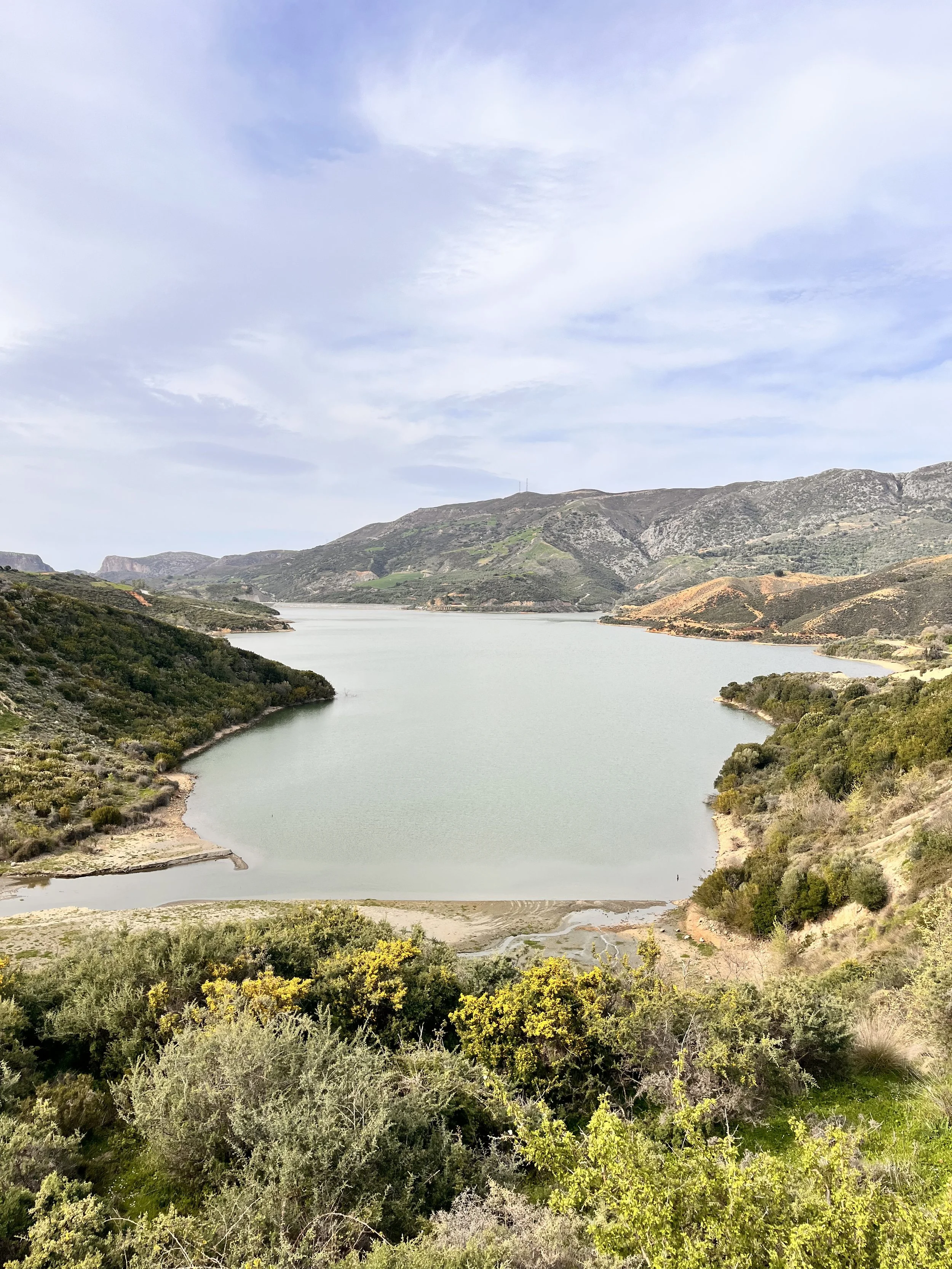
When people worry about villa pools and tourist showers in the context of Crete's water, they are, with respect, worrying about the wrong thing.
Tzanakakis et al. are unambiguous on this point. Agriculture accounts for 78 percent of total water consumption on Crete. Domestic use — all of it, permanent residents and the millions of tourists combined — accounts for 21 percent. Industry accounts for 0.12 percent. The irrigated agricultural area has been growing steadily since 1995, driven primarily by olive groves, vineyards, and vegetable production. Of the approximately 611 cubic hectometres used annually, some 478 cubic hectometres go to irrigation. Around 443 cubic hectometres of that — 93 percent of agricultural water use — is drawn from groundwater, primarily from aquifers that in some areas, particularly in the Messara valley and eastern Crete, are being extracted faster than they recharge.
This is the structural pressure on Crete's water. Not the tourist in a villa pool. Not the hotel guest taking a shower. The over-extraction of groundwater for agriculture — olive trees, greenhouses, the export crops that sustain the Cretan economy year-round, not just in summer — is what is drawing down the aquifers in vulnerable areas. Adding to the problem is what the paper describes as non-revenue water: leakage and loss in the distribution infrastructure, which in some municipalities exceeds 60 percent of the potable water supply. The island is, in some places, losing more than half its drinking water through pipes before it reaches anyone's tap.
To frame a holiday pool as an environmental concern in this context requires a very particular kind of selective attention.
The south coast sits above one of Crete's great aquifers
The second paper in our reading makes the picture more specific — and more reassuring — for anyone staying in the south coast around Agia Galini, Plakias, and Agios Pavlos.
In 2018, Emmanouil Steiakakis of the Technical University of Crete published a detailed hydrogeological study of the Kourtaliotis spring system: the karst aquifer that feeds a cluster of springs near Plakias, draining a catchment area of approximately 105 square kilometres in the mountains directly behind the south coast. The study, published in the journal Geosciences, combines conventional hydrogeological mapping with twenty years of spring discharge data to estimate the actual reserves of the system.
The findings are striking. The permanent geological storage in this karst system — water held in the limestone voids and fissures of the rock itself — is estimated at approximately 415 million cubic metres. The dynamic reserves, the annually renewable portion that cycles through the system each year, are approximately 43 million cubic metres — equivalent to the mean annual spring discharge, which flows at a steady average of around 1.2 cubic metres per second, varying between roughly 725 and 1,800 litres per second across seasons.
To put those numbers in context: the dynamic reserves of this single karst system alone amount to roughly 7 percent of Crete's entire annual water use. The permanent reserves are more than 400 times the annual dynamic renewal. The aquifer renews completely on a timescale of approximately ten years. And crucially, Steiakakis notes that the system's discharge variability is low — even in dry years, the spring keeps flowing at a substantial and predictable rate, reflecting the enormous buffering capacity of the underlying limestone.
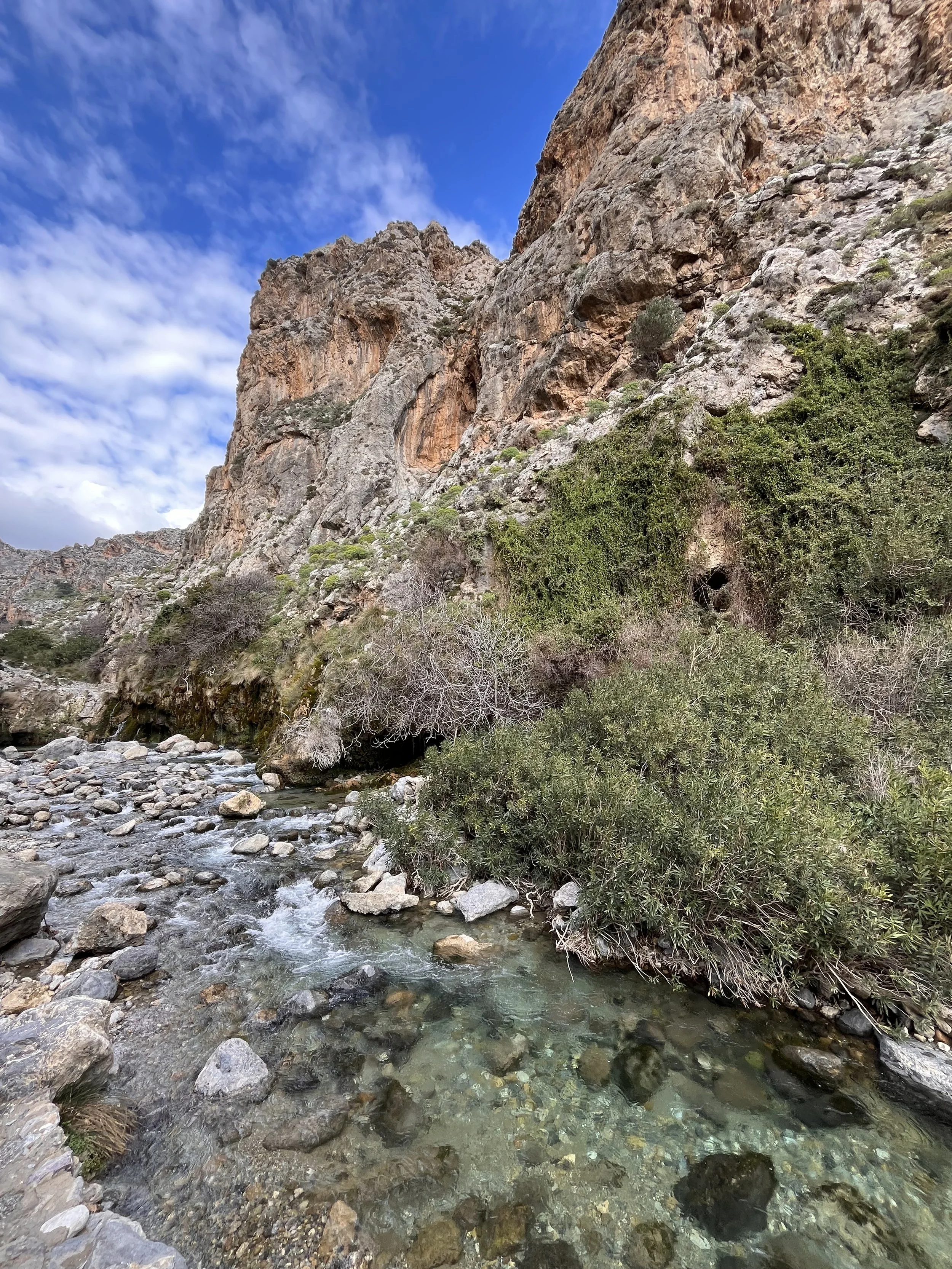
The water quality is excellent: cold, fresh, moderately alkaline, meeting drinking water standards. And the study calculates that it would be technically feasible to extract an additional 21–29 million cubic metres per year from this system beyond its natural spring outflow without compromising its long-term sustainability — a volume that would significantly exceed the entire domestic and tourist water demand of the surrounding region.
This system sits in the mountains directly above the stretch of coast where our villas are located. When you turn on a tap, or fill a pool, in this part of Crete, you are drawing on water resources that are among the most stable and well-supplied on the island.
The Kourtaliotis spring system drains toward the coast near Plakias — a village covered in the STAYS Journal's guide to where to stay in South Crete. The gorge itself, one of the finest walks on the south coast, is featured in our guide on the Kourtaliotiko Gorge and Preveli. The mountains above it — the same limestone massif that holds 415 million cubic metres of groundwater in reserve — are the same ones you see from the terrace of a south coast villa on a clear morning.
The infrastructure gap — and how it is being closed
None of the above means Crete has no water challenges. It means the challenges are specific, structural, and — importantly — addressable. Tzanakakis et al. outline them clearly, and the corrective measures that are now underway.
The Platy River reservoir, listed in the paper as under planning with a capacity of 51 cubic hectometres, is under construction with €160 million in financing from the European Investment Bank and the Council of Europe Development Bank. When complete, it will sit just kilometres from the south coast near Agia Galini and will provide water for irrigation in the Messara Plain — directly addressing the groundwater over-extraction that is the real source of stress in this area. The project will transfer water from the new reservoir through 18.6 kilometres of mains to the overexploited Messara aquifer, relieving the pressure on groundwater that has built up over decades of intensifying agriculture.
Desalination is expanding. The Almyros brackish spring near Heraklion — one of the more remarkable hydrological features on the island — discharges approximately 250 cubic hectometres per year, a volume exceeding 50 percent of Crete's entire annual water need. For most of the year its salt concentration makes it non-potable, but a desalination plant already operational in Heraklion is processing its water, and the paper notes that a proposed dam at 25 metres elevation could dramatically improve the economics of exploiting this resource. The technology is improving; the cost of desalinated water is falling. These are not speculative solutions. They are in progress.
Water reuse — treating wastewater for agricultural irrigation — remains underdeveloped relative to its potential, with around 10 percent of treated effluent currently being reused. The paper calculates that full exploitation of wastewater treatment capacity could reduce agricultural freshwater demand by around 3 percent island-wide. Combined with more efficient irrigation technology (drip and micro-sprinkler systems already cover much of the island's irrigated land, with efficiency estimated at around 80 percent), the pathway to a more sustainable water balance is visible.
And the distribution infrastructure — those leaking pipes losing 60 percent of potable supply in the worst cases — is being upgraded, slowly, as EU funding and political attention finally focus on what the paper identifies as one of the most critical issues in Cretan water management.
The climate dimension, honestly assessed
The long-term projections for Crete's water resources under climate change are not trivial. Research modelled on climate scenarios suggests that precipitation in total may decline, that droughts will likely become more frequent and more intense, and that the gap between wet winters and dry summers may widen. These are genuine concerns that are rightly influencing infrastructure investment decisions.
But a few contextual points are worth holding alongside those projections.
First, as Tzanakakis et al. note, climate variability is not new to Crete. The island has experienced distinct wet and dry periods throughout its recorded and geological history — cold and humid periods, warm and dry periods, the extended drought around 1450 BCE that may have contributed to the collapse of Minoan civilisation itself. The current period of consecutive drier years in parts of the island is serious, but it sits within a pattern of variability that spans millennia, not just the industrial era.
Second, the acute water stress reported in alarming terms in winter 2025–26 was measured against data collected only to January. The second half of that wet season — February, March, April — brought substantially above-average rainfall across the eastern Mediterranean, with March 2026 recording nearly double normal precipitation across the region and the spring months tracking as among the wettest in recorded history for some areas. Reporting that freezes the picture at its worst moment, in the middle of winter before the bulk of the season's rain has fallen, produces a systematically distorted impression.
Third, the south coast of Crete — the area this Journal covers — is not the epicentre of Crete's water stress. That is concentrated in eastern Crete, particularly the Ierapetra basin and the Aposelemi reservoir catchment. The Rethymno region, sitting above the karst system described in the Steiakakis paper, occupies a fundamentally different hydrological position.
What this means for a guest
If you have wondered, as you looked at a villa pool on the south coast of Crete, whether your stay is contributing to an environmental crisis — the answer, as honestly as the available science allows, is no.
You are staying in a region with one of the most stable and well-supplied aquifer systems on the island, in a sector that accounts for around 21 percent of total water use on an island that uses less than a fifth of its theoretical water potential. The structural pressures on Crete's water resources are real, but they are driven by agricultural groundwater over-extraction and infrastructure leakage — neither of which your holiday meaningfully affects.
What your holiday does affect, positively, is the local economy that depends on tourism to sustain the villages, the tavernas, the fishing boats, and the families who have been living on this coast for generations. The tension between tourism and water sustainability is real in some parts of Greece — islands with minimal natural resources and massive visitor-to-resident ratios, served by water tankers and pushed beyond their hydrological limits. The south coast of Crete, with its deep karst reserves, its moderate visitor numbers relative to its natural resources, and its investment in new infrastructure, is not that.
Our Home Collection includes villas across the south coast — from Keras Cliff House on its cliff above the Libyan Sea, to houses above Plakias, Triopetra, and Agios Pavlos — each positioned in this well-supplied hydrological region, each drawing on water resources that the science describes as among the most stable on the island. If you are still deciding where to base yourself, our guide to villa holidays in Crete covers what the south coast offers that the rest of the island does not. And if the natural world of the region is part of what draws you — the botany of the hillsides, the wildlife, the gorges carved by the same water systemsdescribed in this article — the STAYS Journal's guides to botanical Crete and wildlife in Crete are the natural companions to this one.
The Minoans, who built their civilisation in water-scarce conditions and engineered solutions that lasted four millennia, would perhaps find the question slightly puzzling. They understood that water management was a technical and governance challenge, not a reason to stop building on this island. The science suggests they were right then, and the same logic applies now.
References:
Tzanakakis V.A. et al. (2020), "Challenges and Opportunities for Sustainable Management of Water Resources in the Island of Crete, Greece," Water 12(6), 1538. doi:10.3390/w12061538.
Steiakakis E. (2018), "Evaluation of Exploitable Groundwater Reserves in Karst Terrain: A Case Study from Crete, Greece," Geosciences 8(1), 19. doi:10.3390/geosciences8010019.
